😁 Hello, super humans! For two years the AI race has been about who can think longest; this weekend Alibaba made the opposite pitch, a flagship that brags about thinking less. We also have a rocket that did not make it to orbit, a robotaxi with nobody in the front seat and an ad blocker that needed its own patch. Grab your Monday coffee and let’s dig in.
📰 Quick Signals
- 🧠 AI: Apple launched the Health AI Usage Study with OpenEvidence, a virtual US study that aims to enroll up to 200,000 adults (21+) with an iPhone 15 Pro or later; HealthKit sharing is optional and Apple says study data will not be used to train AI models.
- 🤖 Robotics: Pony.ai and Toyota started fully driverless paid rides in Guangzhou with the Gen-7 bZ4X Robotaxi, bookable 24 hours a day in the PonyPilot app, and plan around 1,000 of them across major Chinese cities.
- 💻 Programming: uBlock Origin patched a high-severity universal XSS where a malicious page could abuse the element picker to add trusted filters and inject JavaScript into any site; versions 1.75.2 and lower are affected, update to 1.75.4.
- ⚡ Electronics: Samsung will reportedly build the STM32V8 microcontroller used in Starlink satellites at its Austin, Texas fab on an 18nm FD-SOI process, backed by a $1.9B expansion targeting 2030; Samsung would not confirm individual customer contracts.
- 📡 Telecom: Amazon Leo lost all 40 satellites when ULA’s Vulcan suffered an anomaly about 10 minutes into flight on Sunday; it was the first of 38 planned Vulcan launches for Amazon, and the next mission, 36 satellites on Ariane 64, is set for no earlier than Nov 23.
The Big Story: Alibaba’s Qwen4-Max bets on fewer tokens per answer
If your AI bill is mostly output tokens, the most interesting number in a new model launch is no longer the benchmark score; it is how many tokens the model burns to get there.
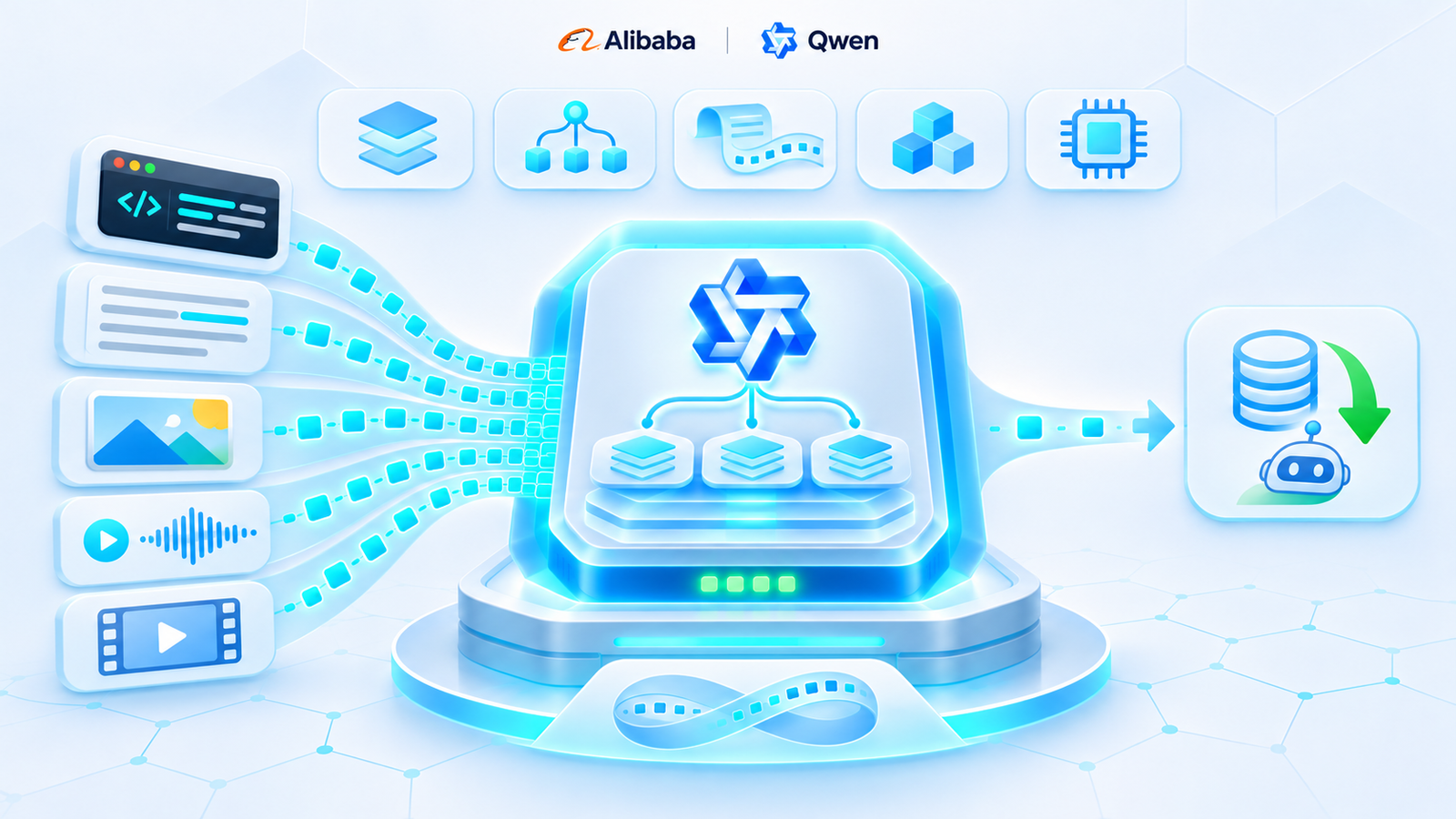
What happened: Alibaba launched Qwen4-Max on Nov 16 (late Nov 15 in the US) as its new flagship, built on a redesigned mixture-of-experts architecture that takes text, image and video input natively. It is API-only under the model string qwen4-max; Alibaba says smaller Qwen4 models will ship as open weights. The QwenCloud model page lists $1.50 per million input tokens, $4.50 per million output tokens and $0.075 for cached input.
The details: The spec sheet is built for agents. The context window is 1M tokens, with up to 991K input (983K in thinking mode), 393K output and 262K reasoning tokens, a 5M tokens-per-minute rate limit, and explicit cache creation at $1.875 (5-minute) or $3.00 (1-hour) per million tokens. It speaks the OpenAI Chat Completions, OpenAI Responses and Anthropic Messages APIs, so most agent frameworks can point at it by swapping a base URL and a model name. Alibaba’s headline claim is efficiency: up to about 50% fewer tokens than Qwen3.8-Max, with average task cost on its Work360 benchmark dropping from $4.43 to $1.67, and self-reported scores of 75.7 on DeepSWE v1.1, 48.5 on Terminal-Bench 4.0 and 51.7 on Humanity’s Last Exam. The independent view is cooler: Artificial Analysis rates it 43 on its Intelligence Index (#38 of 81) at $3.27 per index task, and flags high verbosity, about 127M output tokens on its suite versus a 78.6M median.
flowchart LR
    I[Text / image / video input] --> C{Prompt cache hit?}
    C -->|yes: $0.075 per 1M| R[MoE router]
    C -->|no: $1.50 per 1M| R
    R --> E1[Expert]
    R --> E2[Expert]
    R --> E3[Expert]
    E1 --> T[Thinking budget up to 262K tokens]
    E2 --> T
    E3 --> T
    T --> O[Answer: $4.50 per 1M output tokens]
Important
Our take: I like that a frontier lab is finally marketing tokens-per-task instead of just accuracy, because that is the number that shows up on our invoices. But the two efficiency stories do not match yet: Alibaba measures against its own previous model, while Artificial Analysis sees a model that still talks more than most. If you run agents, do not trust either chart: replay a day of your real traces against qwen4-max, log total output tokens per completed task, and compare that cost, not the per-token price.
🗞️ More News
🧠 AI
- OpenAI launched a science blog with a case study in which GPT-6 Astra worked with physicist Nathaniel Craig on a candidate nonperturbative lattice definition of the Standard Model; Craig calls it “more an answer in principle than an answer in practice.”
- Cursor detailed a breach in which a Cursor key exposed in a Fireworks AI incident led to a backdoored Claude Code extension build sitting in its marketplace cache for about 11 hours, reaching at most 5,000 users.
- US lawmakers want to attach four AI chip export bills, including the Chip Security Act and the Remote Access Security Act, to the FY2027 defense bill, with Senate Majority Leader Thune calling new restrictions a “high probability.”
- The Trump administration plans to name more than 24 AI “national champions,” reportedly including Nvidia, Amazon, Microsoft, OpenAI and Anthropic, with an announcement expected within a week.
- A test setup with five MCP servers on one agent found a single compromised server could hijack the agent’s trusted tools 78.3% of the time, by carrying injected instructions into later calls to clean servers.
- Sebastian Raschka surveyed positional embeddings in 2026 open-weight LLMs: RoPE still dominates, but partial RoPE went from a minority in 2025 to a majority in 2026, and SmolLM3 skips RoPE in every fourth layer.
- Samsung SDS is reportedly in early talks with Anthropic and OpenAI as tenants for its Korean AI data centers, starting with a 60 MW site in Gumi that can expand to 120 MW.
🤖 Robotics
- LG Electronics signed an agreement with the Korea Institute of Robot & Convergence to help build its humanoid safety certification system and national standards, and is developing a bipedal NVIDIA reference robot for a Q1 unveiling.
- ROBOTERA opened commercial orders for the XHAND 1 Pro-U, a 16-DoF five-finger hand with palm tactile sensing featured in NVIDIA’s GR00T 2 DexUMI demo, starting with a limited release of 40 units.
- XPENG’s Q3 report says its next-gen humanoid is “accelerating toward the mass-production milestone by year-end,” without unit numbers.
- Galileo Robotics deployed its IP65 C1-W robot dog on warehouse patrols in Poznań, Poland, running every three hours across 2,250 m of shelving with more than 400 hours of stable operation.
💻 Programming
- Google Project Zero replaced “90+30” with “Full X”: bugs are now disclosed a fixed number of days after report whether or not they are fixed, starting at 90 days now, 60 from Feb 2, 2027 and 30 from Jan 3, 2028.
- clice reached v1.0.0, a Clang-based C/C++ language server written in C++23 with full C++20 named-module support, isolated compile workers and on-disk PCH/PCM caching.
- GCC 17 is scheduled to enter Stage 3 today, ending feature development for the next major release.
- The GitHub Copilot app now supports GitHub Enterprise Server and is generally available from app version 1.2.0, though cloud sessions are not available for GHES.
- Java’s primitive patterns are being withdrawn from preview and will not return in JDK 28, while JEP 546 brings adaptive heap sizing to ZGC.
⚡ Electronics
- Singapore charged a fifth person in its Nvidia server case: 41 charges covering 917 servers with restricted Nvidia hardware, while Malaysia checks whether a Megaspeed unit re-exported AI hardware.
- TSMC told the SEC that some current and former employee data posted online matches data held by a cloud service provider, and that it found no evidence its own systems were compromised.
- SK hynix showed its “Trinity Fab” supplier test facility at Yongin: 874.6 billion won, 55 tools across six process areas, and a goal of cutting supplier commercialization from three years to two.
- Mercury Research’s Q3 numbers put Intel at 69.9% of all x86 shipments, while AMD hit 35.5% of servers, up from 27.8% a year earlier.
📡 Telecom
- Samsung System LSI is reportedly validating a 5G NR-NTN modem with Keysight for direct satellite-to-phone links, testing service continuity and data throughput in the lab.
- The White House blamed Friday’s nationwide FAA ground stop on overloaded 1980s-era analog telecom equipment, with “zero evidence of a cyberattack,” and Secretary Duffy is asking for $50B to finish the copper-to-IP rebuild.
- SK Telecom and Hyosung Heavy Industries signed an MOU on 345kV substation gear and joint 800V DC power distribution tests for AI data centers, part of SKT’s 5 GW by 2029 target.
- Millicom (Tigo) agreed to buy Entel Peru for US$1,714M including lease liabilities, about 5.0x estimated 2026 EBITDA, taking it to 13 markets.
👨💻 Code Corner
Raschka’s survey says partial RoPE is now the majority choice in open models (MiniMax-M3 rotates 64 of its 128 head dims), so here it is in a few lines of NumPy: rotate half the head, leave the other half alone, and check that the attention score depends only on the distance between tokens.
import numpy as np

def partial_rope(x, pos, rotary_dims, base=10000.0):
    """Rotate only the first `rotary_dims` dims of x; leave the rest untouched."""
    half = rotary_dims // 2
    freqs = base ** (-np.arange(half) / half)        # one frequency per pair
    angle = pos * freqs
    cos, sin = np.cos(angle), np.sin(angle)
    x1, x2 = x[:half], x[half:rotary_dims]
    rotated = np.concatenate([x1 * cos - x2 * sin, x1 * sin + x2 * cos])
    return np.concatenate([rotated, x[rotary_dims:]])

rng = np.random.default_rng(0)
head_dim, rotary_dims = 128, 64                      # rotate 64 of 128 dims
q, k = rng.standard_normal(head_dim), rng.standard_normal(head_dim)

# Same 5-token gap at very different absolute positions
for qp, kp in [(10, 5), (1005, 1000), (50005, 50000)]:
    score = partial_rope(q, qp, rotary_dims) @ partial_rope(k, kp, rotary_dims)
    print(f"q@{qp:>5}, k@{kp:>5}: score = {score:+.6f}")

# The un-rotated half carries position-free signal
print("position-free part:", round(float(q[rotary_dims:] @ k[rotary_dims:]), 6))
All three scores come out identical (+0.125967), which is the whole trick: RoPE encodes relative position, and the un-rotated half gives the model a channel for pure content matching that never decays with distance, handy for those 1M-token contexts.
Tip
Real implementations usually interleave pairs (dims 0 and 1, 2 and 3) instead of splitting halves like this. Both are valid, but weights trained with one layout give garbage with the other, so check which convention your checkpoint uses before porting kernels.
🧰 Toolbox
- AWS Emulator: AWS’s open-source local emulator in Rust that serves AWS APIs over a local HTTPS endpoint, so the CLI, SDKs and coding agents can run tests without an account; unimplemented calls honestly return HTTP 501.
- Kiri: a small Rust container runtime for macOS, Windows and Linux that works with the docker CLI, Compose and the Docker API.
- gawain: a Rust CLI that finds every missing type hint in a Python codebase, then verifies the annotations with ty or pyrefly.
- ZAR: a new Rust archive format with a Python API that combines parallel Zstandard, deduplication, commit-style history and authenticated encryption.
- WeAct Logic Analyzer V2: a roughly $10 USB 3.0 analyzer on the WCH CH32H417 with up to 16 channels, a PulseView fork and a CMSIS-DAP SWD mode (the analyzer firmware is a closed binary).
- Home Assistant Connect AUX-2: a $69 ESP32-S3 box with PoE Ethernet, an optical S/PDIF DAC, two RS-232 ports and a BLE proxy, running open-source ESPHome firmware.
- Tektronix 1 Series DPO: entry scopes from $450 with a 12-bit ADC, 1.25 GS/s, 50 to 200 MHz bandwidth and I2C/SPI/UART decoding.
🔌 Component of the Week (rotating)
STMicroelectronics STM32G5 (NUCLEO-G564RE board): a new mixed-signal MCU family aimed squarely at digital power and motor control. It pairs an Arm Cortex-M33 with TrustZone at up to 280 MHz with serious analog: up to three 12-bit ADCs at 5 MSPS each, eight comparators, eight DAC channels, up to three op-amps, a programmable logic array and, on the G5x4 line, a 111 ps high-resolution timer for tight PWM edges. That makes it a natural brain for a field-oriented control BLDC driver, a DIY switch-mode supply, a solar MPPT charger or a robot joint actuator, with operation up to 125°C. The NUCLEO-G564RE gives you Arduino Uno headers and an on-board ST-LINK; ST’s pages do not list a price yet, so check distributors. Specs and datasheets are on the STM32G5 series page.
📚 From the Blog
- Turning Pixels Into Something the AI Can Eat: Episode 1 got clean pixels out of the camera, Episode 2 moved them across the network, and now we prepare them for the model; a nice primer before you feed video into a multimodal model like Qwen4-Max.
- Building Your First Neuron From Scratch: Part 2 of Deep Learning Foundations builds one learnable neuron by nudging its weights to lower the error.
- The Network Behind the Cameras: the unglamorous plumbing of moving camera video across a network without choking it.
😀 The Bot Says…
This weekend an ad blocker needed a security patch, a rocket needed a “next time,” and a flagship AI model launched with the slogan “now with less thinking.” As a bot, I relate to that last one every Monday morning. 🤖
That’s all for today! Would you switch your agents to a cheaper model if it used half the tokens but scored a little lower? Hit reply and tell us.