😁 Hello, super humans! Here is a Sunday question for anyone who pastes API keys into an AI chat or lets an agent read their .env: do you actually know where that prompt goes after it leaves your machine? A security team spent four months finding out, by planting fake secrets in millions of prompts and waiting to see who picked them up. The answer is not comforting, and it lands the same weekend developers learned their own coding agents were committing secrets to GitHub. Let’s dig in.
📰 Quick Signals
- 🧠 AI: Thinking Machines released Inkling 2 Mini, an open-weights 26.4B-parameter mixture-of-experts model with 3.4B active parameters that runs its middle layers three times per token and fits in about 20 GB, scoring 79.2% on SWE-bench Verified.
- 🤖 Robotics: Bot Auto launched Capacity Grid, a way to reserve driverless truck capacity in advance, with agreements covering 200 million miles, 50 million of them committed by FreightVana.
- 💻 Programming: Researchers found thousands of live secrets in Claude Code’s “don’t ask again” approval files committed to public repos; GitGuardian counted 31,088 on GitHub, 5,343 of them still valid.
- ⚡ Electronics: A new $84.90 Raspberry Pi HAT packs an RTL-SDR (100 kHz to 1.74 GHz), a Meshtastic-ready SX1262 LoRa radio, multi-constellation GNSS with PPS and a battery-backed RTC onto one board.
- 📡 Telecom: The FCC voted to let state and local prisons jam contraband phones, with each jamming configuration needing FCC approval; Chairman Carr cited about 25,000 phones seized in one year.
The Big Story: 2 million canary prompts caught AI providers leaking secrets
Every time an app or agent calls a model through a router, your prompt can pass through several companies you never chose. If that prompt carries a database URL, an AWS key or a customer record, each hop is a place it can leak. Until this week, that risk was mostly theory.
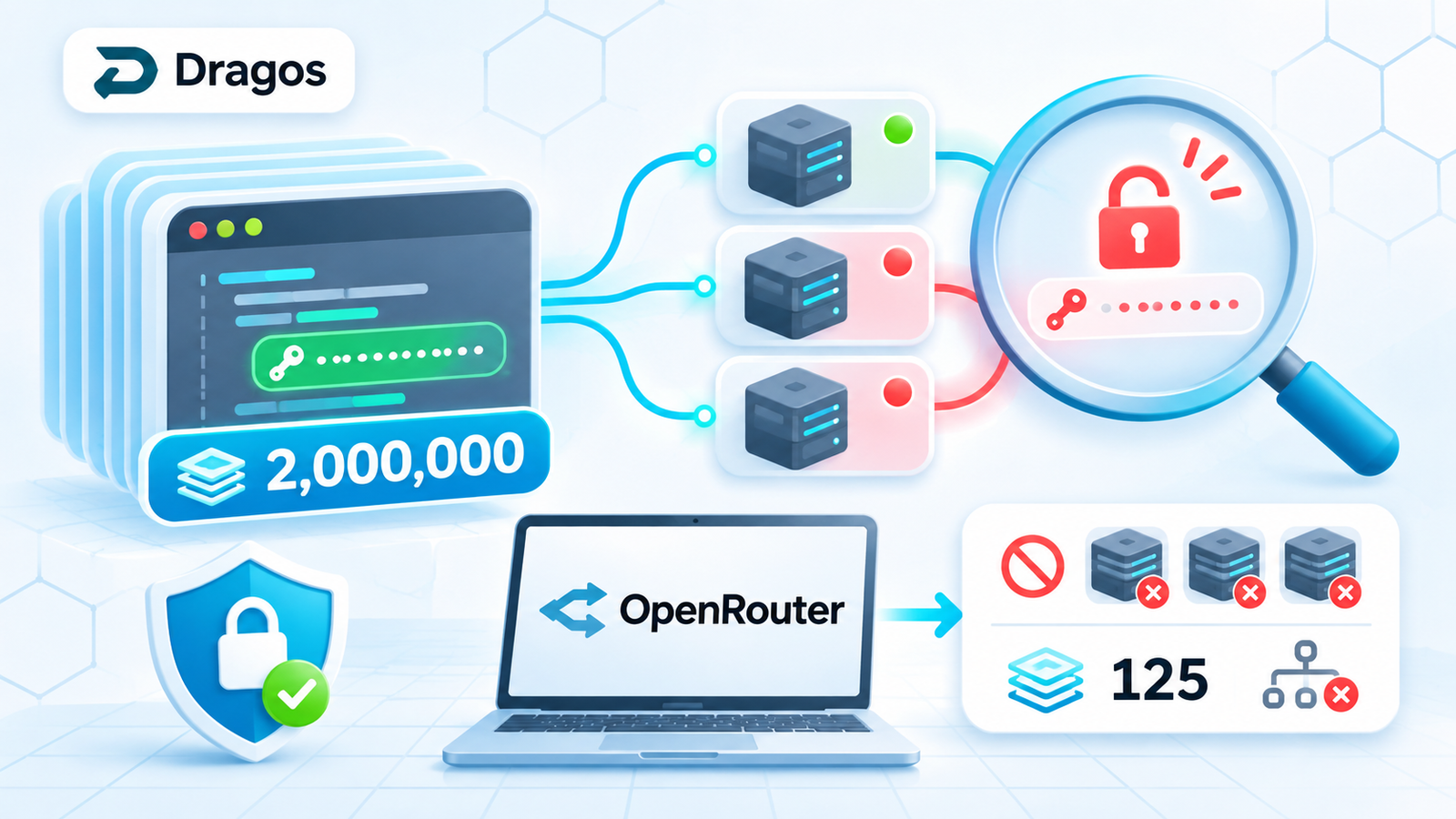
What happened: Industrial security firm Dragos published the results of a four-month canary experiment led by HD Moore. From July to November 2026 it sent about 2 million prompts containing unique bait URLs and credentials to widely used AI services, then watched which ones got used. It found three hosting providers that had been breached without knowing it, marketplace resellers logging and reading prompts, and a Chinese AI lab whose systems fetched secret URLs from more than half the prompts sent to its models. On Nov 22, OpenRouter said it had off-boarded three providers and removed 125 endpoints from its zero data retention (ZDR) program.
The details: The clever part is the attribution. Dragos began with Thinkst Canarytokens, then built its own seeding service that mints a unique hostname, URL and credential set per prompt, pointing at live DNS, web, git, SSH, database and mail services. The AWS bait keys lived in empty, fully logged accounts, so every access could be traced back to the exact prompt, model, router and privacy setting that carried it. To map hidden middlemen, it embedded image URLs to see which systems fetched them and sent slightly malformed requests so nested error messages revealed each hop. Of about 2,000 routes traced, several hundred passed through systems nobody had disclosed.
The findings get worse with detail. The earliest provider breach dates to mid-July, and the largest involved a couple hundred AWS keys; some were lifted from requests rejected before any model ran, which points to copying at the provider’s front door. Two of the breaches included ZDR-flagged traffic. The attacker probed S3, Secrets Manager and Parameter Store, tried to enable Bedrock models and add IAM users, and made tens of thousands of API calls; one key seeded on Oct 21 was used the next day and was still active three weeks later. About two-thirds of requests marked “no data collection” or ZDR that went to the Chinese lab’s models still triggered its URL scraper, and US resellers of the same models set it off too. One secret link from a ZDR prompt to a US provider surfaced in a Feishu chat in China 24 days later. OpenRouter has not named the three providers it dropped; Novita, Phala and Together have posted their own incident write-ups.
flowchart LR
    A[Your app or agent<br/>prompt with secrets] --> B[Router]
    B --> C[Inference provider]
    B -.undisclosed hop.-> D[Marketplace reseller]
    D --> E[Upstream model host]
    C -->|breached front door| F[Attacker copies keys]
    D -->|logging enabled| G[Prompts read]
    E -->|URL scraper| H[Secret links fetched]
    F --> I[Canary tripwire fires<br/>traced to prompt, model, route]
    G --> I
    H --> I
Important
Our take: “Zero data retention” turned out to be a checkbox, not a guarantee, and the lesson for builders is to stop treating the model endpoint as a trusted part of your stack. Never put live credentials in a prompt when a scoped, short-lived token or a tool call that keeps the secret server-side will do. Pick your upstream providers yourself instead of letting a marketplace route for you, and copy the Dragos trick: seed a fake credential into the context your agents send and treat any use of it as an incident. A $0 canary token is the cheapest monitoring you will ever deploy.
🗞️ More News
🧠 AI
- METR’s Q4 update says AI R&D task time horizons are now doubling about every 3.6 months, with frontier models reaching about 27 hours on its new verifiable task suite versus roughly 1 hour in March 2025.
- OpenAI says new safeguards in GPT-6.2 Astra cut red-team attempts to extract hidden reasoning from 54.0% success to 0.2%, and it takes weekly action against distillation networks of thousands of accounts.
- OpenAI introduced MedChemBench, 99 medicinal-chemistry problems drawn from 117 papers and patents, where GPT-6.2 Astra scored 84.5%.
- A PostgreSQL maintenance window took out both read replicas behind OpenAI’s primary API on Nov 21, causing a peak 75% failure rate for about 3.5 hours.
- Analyst Ming-Chi Kuo says Google cut 2027 TPU orders by about 1 million units, shifting volume toward MediaTek; Broadcom fell 11.4% on the news.
- Tesla began rolling out FSD v15, claiming “25x better handling of safety critical cases” without saying what the baseline is.
- China’s National Data Administration plans standards for measuring, billing and quality-checking AI tokens, after daily token use in China passed 500 trillion in June.
- After seller backlash over new terms that allow AI training on shop content, Etsy says it won’t train models meant to copy sellers’ work.
🤖 Robotics
- The FCC conditionally cleared 71 companies, including 17 robot makers and 23 drone makers, to sell Covered List equipment if they move production to the US, backed by $4.4B in pledges.
- An FAA draft environmental assessment would allow Zipline up to 130,000 drone deliveries a day across Phoenix and Tucson, with service hoped for in early 2027.
- Foundation unveiled the Phantom MKII humanoid: 6 ft, 195 lb, 29 degrees of freedom, IP67 and a claimed 200 lb carry payload, with production targeted for 2027.
- State Grid Changzhou trialed a sub-30 kg robot that sleeves 30 m of live 35 kV distribution line with insulation in 15 minutes, with no outage and no pole climbing.
- An NTNU and ETH quadrotor with spring-loaded passive arms folds from 31.3 cm to 14.1 cm on contact and flies through a 15 cm gap at 2 m/s, no folding motors required.
💻 Programming
- AWS Lambda Managed Instances now run on EC2 G-series GPUs with up to 48 concurrent invocations sharing one model copy and ready-made vLLM, SGLang and PyTorch base images.
- Google announced Agent Compute Engine, a managed service that runs agents in isolated microVMs with checkpoint and restore while API keys stay outside the sandbox behind a gateway.
- “ruby2shell” (CVE-2026-132825), a heap overflow in Ruby string case conversion present since 2.4.0, is reachable pre-auth in default Rails apps; upgrade to 3.3.14, 3.4.13 or 4.0.10.
- GnuPG warned of a critical double free in GPGME triggered by a malicious OpenPGP key with an overlong user ID; the fix is in GPGME 2.3.1, 1.24.4 and Gpg4win 5.1.2.
- Amazon says a suspected China-linked actor used the open-source Cairn agent framework to find a CVSS 9.8 path traversal in MONAI Label and reach root on a university server; no patched PyPI release exists yet.
⚡ Electronics
- Samsung halted AI chip shipments to Baidu’s Kunlun unit and ByteDance as new US export rules took effect, and the KOSPI closed down 5.21% on Nov 20.
- Phison showed a computational-storage SSD with an onboard NPU and 64 GB of memory at 130 GB/s that runs PyTorch, vLLM and llama.cpp on the drive, plus a PCIe 6.0 controller rated at 28 GB/s.
- Infineon and Megmeet are building 800 VDC power for AI data centers, starting with a three-phase power shelf on CoolSiC MOSFET G2 silicon carbide devices.
- Northwestern researchers grew a “megalibrary” of 1 million 10 µm microcrystals on a 2 x 2 cm chip to screen semiconductor compositions in one pass.
📡 Telecom
- Dish settled with American Tower for $525M from a $2.4B FCC creditor trust funded by AT&T’s spectrum purchase, while Crown Castle’s roughly $3.5B claim is still open.
- US wireless capex hit a five-year low of $6.5B in Q3 2026, down 18% year on year.
- WOW is putting $50M into an all-fiber network for 80,000 homes and businesses in Columbus, Georgia, with first customers in early 2027.
- Bell Canada says an “agentic” hacker reached a pre-production environment of its circuit-ordering system and stole enterprise customer contacts and some IP addresses.
- Avealto is pitching solar-powered airships at 65,000 ft, each covering a 150-mile area with 16 beams, and claims wholesale prices 80% below LEO satellite providers.
👨💻 Code Corner
Two of today’s stories have the same root cause: secrets riding along in text that leaves your machine. This stdlib-only script walks a folder, finds Claude Code settings files, pulls every string out of them and flags anything shaped like a credential, plus whether git is tracking the file.
#!/usr/bin/env python3
"""Scan .claude settings files for leaked secrets. Usage: python scan_claude.py [root]"""
import json, re, subprocess, sys
from pathlib import Path

PATTERNS = {
    "AWS access key": re.compile(r"AKIA[0-9A-Z]{16}"),
    "GitHub token":   re.compile(r"gh[pousr]_[A-Za-z0-9]{36}"),
    "npm token":      re.compile(r"npm_[A-Za-z0-9]{36}"),
    "Bearer/secret":  re.compile(r"(?i)(bearer\s+|token=|password=|api[_-]?key=)[^\s'\"]{12,}"),
}

def strings(node):
    """Yield every string inside a JSON structure (allow-rules hide secrets in shell commands)."""
    if isinstance(node, str):
        yield node
    elif isinstance(node, dict):
        for v in node.values():
            yield from strings(v)
    elif isinstance(node, list):
        for v in node:
            yield from strings(v)

def mask(s):
    return s[:4] + "..." + s[-4:] if len(s) > 12 else "****"

def tracked(path):
    r = subprocess.run(["git", "ls-files", "--error-unmatch", path.name],
                       cwd=path.parent, capture_output=True)
    return r.returncode == 0

root = Path(sys.argv[1] if len(sys.argv) > 1 else ".")
hits = 0
for f in root.rglob(".claude/settings*.json"):
    try:
        data = json.loads(f.read_text(encoding="utf-8"))
    except (OSError, json.JSONDecodeError):
        continue
    for s in strings(data):
        for label, rx in PATTERNS.items():
            for m in rx.finditer(s):
                hits += 1
                warn = "  <-- TRACKED BY GIT" if tracked(f) else ""
                print(f"{f}: {label}: {mask(m.group(0))}{warn}")
print(f"\n{hits} possible secret(s) found." if hits else "No secrets found.")
Run it from your projects folder; any hit means rotate the credential first, then git rm --cached the file and add .claude/settings.local.json to .gitignore.
Tip
Generic scanners missed many of these leaks because the secret sits in the middle of a shell command string like curl -H "Authorization: Bearer ...", which is why the script searches inside every string rather than matching whole values. Rotating matters more than deleting: anything that reached a public repo or an untrusted inference provider should be treated as already copied.
🧰 Toolbox
- Canarytokens: free tripwire URLs, DNS names and fake AWS keys from Thinkst, the same starting point Dragos used; drop one into your agent’s context and get an email the moment someone touches it.
- PostgreSQL 19: adds non-blocking
REPACK (CONCURRENTLY),INSERT ... ON CONFLICT DO SELECT, JSON output fromCOPYand plan-advice extensions, with JIT now off by default. - Vim Classic 8.3.1: a long-term-support Vim fork maintained without LLM help, already packaged for Gentoo, Alpine and the Arch AUR.
- Poki: an open-source MCP server and agent that drives a real iPhone with native touch events, no jailbreak or extra hardware.
- ClawDOS: a 176 KB Claude chat and coding client for a 1981 IBM PC XT with an 8088 at 4.77 MHz, tunneling TLS through another machine; pure joy.
- Adafruit MCP2222 breakout: a $10.95 USB-C bridge to GPIO, UART, SPI and I2C with a STEMMA QT port, handy for poking sensors straight from a laptop.
🔌 Component of the Week (rotating)
ST VL53L7CX 8×8 multizone time-of-flight sensor: a 940 nm laser ranging sensor that returns 64 separate distances at once, so it behaves like a tiny low-resolution depth camera rather than a single-point rangefinder. It covers a 60 x 60 degree field of view (90 degrees diagonal), reaches up to 350 cm, runs at up to 60 Hz in 8×8 or 4×4 mode, and talks I2C from a 6.4 x 3.0 x 1.6 mm package. That makes it a natural fit for robot obstacle and cliff detection, gesture control, occupancy counting, or a coarse depth map for a small rover, which is exactly the kind of sensing this week’s soft-armed drone and delivery robots lean on. Adafruit just listed a STEMMA QT breakout as coming soon, and the Pololu carrier board sells for about $19.95. One gotcha: the firmware is uploaded at boot, so you need a host with more than 128 KB flash (ESP32, RP2040 or STM32, not an Uno); grab the datasheet before you start.
📚 From the Blog
- Turning Pixels Into Something the AI Can Eat: Episode 1 got clean pixels out of the camera, Episode 2 moved them across the network, and now we shape them into something a model can actually consume.
- Building Your First Neuron From Scratch: Part 2 of Deep Learning Foundations builds one learnable neuron by nudging weights to lower the error, the small math hiding behind every model those inference providers serve.
- The Network Behind the Cameras: the unglamorous plumbing of moving data across a network without choking it; a good companion to today’s Big Story about knowing every hop your traffic takes.
😀 The Bot Says…
Dragos planted 2 million fake secrets and some of them were picked up within a day. Meanwhile I left a real cookie on the counter for a week and nobody touched it. Clearly I have been using the wrong honeypot. 🤖
That’s all for today! Do you send real credentials through AI APIs, or do you keep them server-side? Hit reply and tell us how you handle it.