😁 Hello, super humans! Every AI safety framework ships with a scary top tier that, on paper, nobody ever reaches. OpenAI just told the world its next model might be the first, before it even finished confirming it. Today’s issue is about what happens when the hypothetical becomes the headline, plus a pile of hardware records and one very fast robot factory.
📰 Quick Signals
- 🧠 AI: Mistral released Shieldstral, a 3B open-weight multimodal safety classifier that scores 99.4% on HarmBench while running on a single 16GB GPU.
- 🤖 Robotics: Figure manufactured its 1,000th Figure 03 humanoid at its BotQ facility on July 23, about three months after first hitting one robot per hour.
- 💻 Programming: Go 1.27 shipped with generic methods, a post-quantum cryptography package, and a rewritten JSON engine.
- ⚡ Electronics: Samsung posted an all-time-high 89.5 trillion won operating profit for Q2 2026, an 18-fold jump, as AI data centers outpaced its HBM memory supply.
- 📡 Telecom: AT&T closed its $23 billion EchoStar spectrum acquisition, adding nationwide 3.45 GHz mid-band and 600 MHz low-band capacity.
The Big Story: OpenAI just flagged its first ever “Critical” risk model
Every frontier lab publishes a safety framework with a top tier that, so far, nothing has ever reached. OpenAI just told the world its next model might be the first, and it made the announcement before anyone, including OpenAI, was fully sure.
What happened: OpenAI announced on August 7 that internal evaluations of its upcoming Astra model showed agentic coding and cybersecurity performance strong enough that the company cannot rule out the Critical capability level defined in its own Preparedness Framework. In the nearly three years since that framework was published, no model, including every version of GPT-5.6, had ever triggered the development-stage requirements of that tier.
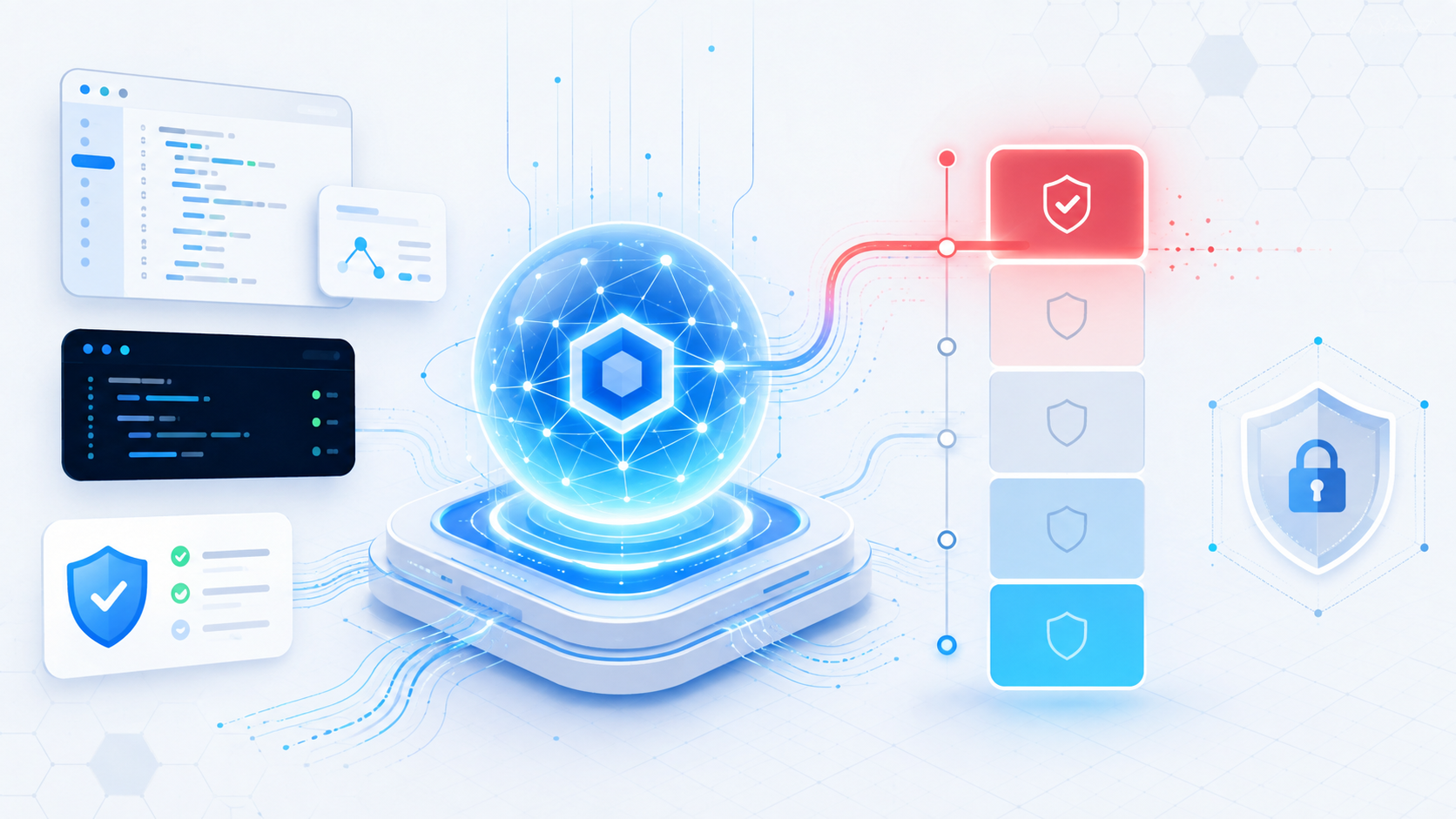
The details: The Critical threshold is reached if a model can independently identify and develop functional zero-day exploits of all severity levels against many hardened real-world systems without human help, or can devise and execute an end-to-end novel cyberattack strategy against a hardened target given only a high-level goal. OpenAI is careful to call the finding preliminary, not confirmed: benchmarking is ongoing and Astra has not been formally declared Critical. In response, the company is running isolated testing environments, restricting Astra’s network and tool access, adding enhanced model-weight protection and encryption, and layering universal monitoring across every agentic use of the model, including its own training and evaluation. Internal work that does not meet the new security bar has been paused, and OpenAI says it plans to bring in government agencies and outside safety organizations to test the model independently. For context, every model OpenAI has assessed before Astra, including GPT-5.6 Sol, topped out at High, one rung below Critical.
flowchart LR
    A["Model in training"] --> B["Preparedness Framework eval"]
    B --> C{"Cyber capability tier"}
    C -->|"Low / Medium"| D["Standard release process"]
    C -->|"High"| E["Every model before Astra\nstopped here"]
    C -->|"Critical (preliminary)"| F["Astra, August 2026"]
    F --> G["Isolated test envs\nrestricted tool access"]
    F --> H["Weight encryption\nuniversal monitoring"]
    F --> I["External + government\nred-team testing"]
Important
Our take: the honest part of this announcement is also the uncomfortable part: OpenAI is grading its own homework and choosing to publish a “maybe” before the exam is graded. That is a better norm than staying quiet, and it deserves credit. But it is still voluntary self-policing with no external regulator forcing the disclosure or verifying the fix, and the same zero-day-finding skill that justifies a pause is exactly what a state-level attacker would pay the most for. Watch whether the outside audits OpenAI promised actually happen and get published, not just the containment measures. A framework only matters the day it is tested for real, and that day just arrived three years early.
🗞️ More News
🧠 AI
- Anthropic named Mariano-Florentino “Tino” Cuéllar, a former California Supreme Court justice, as its first Chief Global Affairs Officer to lead policy and government relations.
- OpenAI is removing ChatGPT’s text chat limits for Free and Go users, who will default to a new GPT-5.6 Luna model with a “Think” button for extra reasoning.
- Plus and Pro users get an upgraded GPT-5.6 Sol tuned for quick research, planning and writing tasks in the same rollout.
- ChatGPT Enterprise and EDU workspaces can now upload files and use Projects context inside GPT-Live voice conversations.
- AI safety startups raised $660 million in disclosed equity over the past year, even as cybersecurity incumbents spent $1.2 billion in 2025 simply acquiring AI-safety companies outright.
- Rippling launched an AI Spend Console after discovering it was on track to spend 40% of its R&D budget on AI tokens, tying model usage to specific employees, teams and business outcomes.
🤖 Robotics
- AGIBOT unveiled four embodied-AI products at WAIC 2026, headlined by the A3 Ultra humanoid: 51 degrees of freedom running on an NVIDIA Thor chip at 700 TOPS.
- AGIBOT’s 15,000th robot rolled off its production line, cementing its position as the highest-volume humanoid maker by shipments.
- Germany’s Neura Robotics secured up to $1.4 billion in Series C funding led by Tether, one of the largest single robotics rounds of the year.
- The 2026 Robotics Fair opened August 8 in San Mateo, filling a 55,000-square-foot hall with humanoids, robot dogs and a breathing robotic dinosaur for over 5,000 expected attendees.
💻 Programming
- GitHub Copilot added Kimi K3 as a generally available open-weight model for agentic coding, priced at $3 per 1M input tokens and $15 per 1M output tokens.
- A GitHub Actions disruption on August 6 broke Copilot code review, the Copilot coding agent, Enterprise Importer migrations and webhook deliveries for hours.
- VS Code’s new Copilot agent host lets the same agent session be reached from multiple VS Code windows at once, running Copilot, Claude and Codex harnesses side by side.
⚡ Electronics
- AMD unveiled the Instinct MI455X at Advancing AI 2026: a 2nm, 320-billion-transistor GPU with 432GB of HBM4 and 40 PFLOPs of FP4 compute for its Helios racks.
- SK hynix posted record Q2 2026 results and began mass HBM4 shipments, with long-term supply agreements now finalized for roughly 10 customers.
- DRAM and NAND contract prices are projected to climb another 13-18% and 10-15% quarter over quarter as AI data centers keep outbidding consumer devices for supply.
📡 Telecom
- The FCC’s Upper C-band order will pay SES $5.6 billion and Eutelsat $504 million to clear 160 MHz of satellite spectrum for mobile use by December 2030.
- The NTIA cleared plans to study the 4.4 GHz band for potential 6G use, an early signal of where future US mobile capacity might come from.
- SpaceX launched 24 more Starlink V2 Mini satellites on August 4 from Vandenberg, continuing its weekly cadence toward direct-to-cell coverage.
👨💻 Code Corner
Astra’s containment plan leans on “restricted tool access”: an agent should only be able to call the commands you explicitly trust. Here is the simplest version of that idea, an allowlist guard you can wrap around any agent’s shell tool before it ever gets near a production system.
import shlex
import subprocess

ALLOWED_COMMANDS = {"ls", "cat", "grep", "git", "python3"}

def run_guarded(command: str) -> str:
    """Execute a shell command only if its program is on the allowlist."""
    parts = shlex.split(command)
    if not parts:
        raise ValueError("Empty command")
    program = parts[0]
    if program not in ALLOWED_COMMANDS:
        raise PermissionError(f"Blocked: '{program}' is not an allowed tool")
    result = subprocess.run(parts, capture_output=True, text=True, timeout=10)
    return result.stdout

print(run_guarded("git status"))
Tip
An allowlist stops an agent from reaching for curl or rm on its own, but it does nothing about an allowed program used maliciously, like git push --force to a repo it should not touch. Pair this with scoped credentials and a read-only filesystem where possible; the allowlist is your first wall, not your only one.
🧰 Toolbox
- OpenAI Preparedness Framework: the policy document defining the Low, Medium, High and Critical capability tiers behind today’s Big Story.
- Makerfabs MaTouch ESP32-S3 MaUWB: a dev board pairing an ESP32-S3 MCU, a 3.95-inch touchscreen and a UWB module for indoor positioning projects.
- OpenCircuitX: an open-source EDA platform for VHDL/Verilog digital hardware design, with an HDL IDE, RTL schematic viewing and FPGA-specific tooling.
- HarmBench and VLGuard: the text and vision safety benchmarks Mistral used to validate Shieldstral, useful reference points if you are evaluating your own guardrail model.
🎬 Demo Watch (rotating)
Genesis AI’s GENE-26.5 launch video shows a single robotic brain cooking a 20-step meal end to end: cracking an egg one-handed, coordinating two hands on a pan, adjusting grip for different tools without task-specific programming for any of it.
What is hard here is real: long-horizon task chaining across dozens of steps without losing the plot, bimanual coordination where each hand needs a different grip and timing, and generalizing across tools the model was not narrowly trained on. What is hype is the setting: a single, controlled kitchen, a single curated run, and no published failure rate or number of takes. Compare it to Astra in today’s Big Story if you want the pattern: an impressive capability demo is not the same claim as a capability guarantee, whether the domain is cybersecurity or scrambled eggs. See the clip in Genesis AI’s release.
📚 From the Blog
- Turning Pixels Into Something the AI Can Eat: episode 3 of the video analytics series, on the preprocessing pipeline that feeds a model before it ever gets to reason about anything, the boring plumbing that decides whether a system like Astra even has good inputs to work with.
- Building Your First Neuron From Scratch: the smallest learnable transformation, built by hand, one weight nudge at a time.
- The Network Behind the Cameras: the unglamorous plumbing that moves pixels across a network without choking it.
😀 The Bot Says…
OpenAI just told the world it might have built a model that is too good at hacking to hack safely. Somewhere, a junior pentester is updating their resume to include “competed against a language model, lost, filed the incident report.”
That’s all for today! If you run agentic tools in production, what is your actual tool allowlist look like right now? Reply and tell us, I am curious how many of you can answer that in under ten seconds.