😁 Hello, super humans! The universal translator just stopped being science fiction. Real-time, on-device speech translation crossed the “actually usable” line this week — and the same day, OpenAI and Anthropic started a price war ahead of their dueling IPOs. Cheap models and instant translation in one news cycle. Let’s dig in.
📰 Quick Signals
- 🧠 AI — OpenAI is reportedly planning a price war with Anthropic, slashing token costs as both companies head toward IPOs (The Neuron).
- 🤖 Robotics — Japan Airlines began trialing Unitree-based humanoid robots for baggage handling and cabin cleaning, reportedly around $15,400 per unit (Robotics News, June 2026).
- 💻 Programming — Next.js 16.2 landed with a claimed 400% faster dev-server startup and deeper tooling hooks for AI coding agents (InfoQ).
- ⚡ Electronics — Researchers at Skoltech used a carbon-nanotube coating to create on-chip terahertz waveguides, a step toward silicon THz-band electronics (EDN).
- 📡 Telecom — Corning is emerging as a key AI-infrastructure supplier as hyperscalers pour money into fiber to link data centers (RCR Wireless).
The Big Story: Real-time translation is finally real
For years “live translation” meant a laggy transcript and a robotic voice a sentence behind. This week the demos crossed into something you’d actually use mid-conversation.
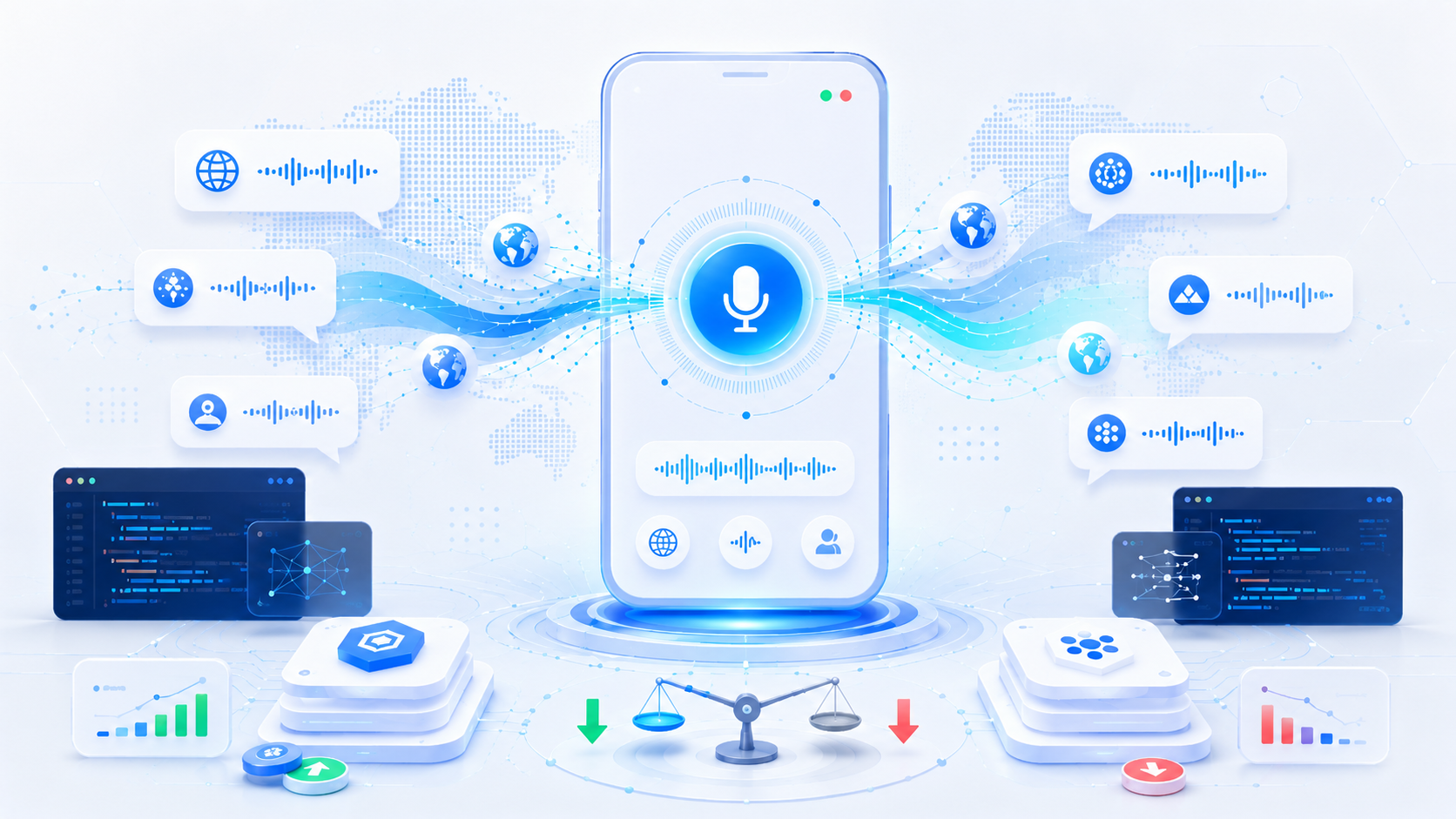
What happened: A wave of low-latency, speech-to-speech translation shipped at once — Google turned the phone into a live interpreter, and competing apps now hold a back-and-forth conversation across languages with only a short delay (The Neuron).
The details: The unlock isn’t one model — it’s the pipeline collapsing. Older systems chained speech-to-text, then text-to-text translation, then text-to-speech, each adding latency and stripping tone. The newer approach pushes audio through models that translate closer to end-to-end and stream partial output as you speak, so the listener hears a near-simultaneous voice instead of waiting for a full sentence. Doing it on-device (or at the edge) also sidesteps the round-trip to a server, which is where most of the old lag lived.
Important
Our take: The interesting shift for builders is architectural, not linguistic — streaming, speech-native pipelines beat the old transcribe-translate-speak chain on both latency and tone. If you’re building anything voice, assume “wait for the full sentence” UX is now legacy. The catch worth testing before you trust a demo: accuracy on idioms, names, and code-switching, where these systems still quietly guess.
👨💻 Code Corner
You don’t need a fancy realtime API to prototype translation — a few lines against any OpenAI-compatible endpoint gets you a working text translator to build on:
from openai import OpenAI

client = OpenAI()  # uses OPENAI_API_KEY

def translate(text: str, target: str = "Spanish") -> str:
    resp = client.chat.completions.create(
        model="gpt-4o-mini",
        messages=[
            {"role": "system", "content": f"Translate the user's text into {target}. Reply with only the translation."},
            {"role": "user", "content": text},
        ],
    )
    return resp.choices[0].message.content

print(translate("The universal translator is finally usable."))
Swap the base_url and model for a local model and the same function runs offline — handy when you don’t want every sentence leaving the device.
Tip
🧰 Toolbox
- Whisper — OpenAI’s open-source speech-recognition model; the de facto starting point for any voice project.
- Argos Translate — fully offline neural machine translation you can embed in your own apps.
- Piper — fast, local neural text-to-speech that runs happily on a Raspberry Pi.
- Next.js — the React framework; 16.2 cuts dev-server startup time dramatically.
- llama.cpp — run LLMs locally on modest hardware; the backbone of countless offline AI tools.
🛠️ Build of the Week (rotating)
Pocket real-time translator on a Raspberry Pi — a self-contained device that listens, translates, and speaks back, no cloud required.
- Difficulty: Intermediate
- Parts: Raspberry Pi 5, USB microphone, small speaker, Whisper + Argos Translate + Piper
- Why we like it: it turns this week’s big story into a weekend project, and because everything runs locally, your conversations never leave the device.
😀 The Bot Says…
Douglas Adams promised us a Babel fish you stick in your ear. We got an app that does the same job and also tracks your location, suggests restaurants, and shows ads. Progress! 🐟🎧
That’s all for today! What language would you point a live translator at first? Reply and tell us — we read everything.
Forwarded this by a friend? Subscribe here to get the next issue in your inbox.