😁 Hello, super humans! If last week felt like watching a sci-fi trailer, that’s because Shanghai just wrapped the largest robotics expo on record, and thirty-two full-size humanoids started throwing punches for a 10-million-yuan purse. Under the showmanship, something real changed this week: embodied AI stopped being a demo and started shipping a spec sheet. Let’s dig in.
📰 Quick Signals
- 🧠 AI: Anthropic shipped Claude Science, an AI workbench aimed at researchers running literature review, data analysis, and experiment design in one place.
- 🤖 Robotics: SoftBank exercised its put option in Boston Dynamics; Hyundai-side shareholders are moving to buy the remaining stake for roughly $325 million.
- 💻 Programming: TypeScript 7.0, the native Go port of the compiler, reached release-candidate stage and clocks in about 10x faster than the current toolchain.
- ⚡ Electronics: TSMC raised its 2026 outlook to $60B–$64B capex and slightly above 40% revenue growth, citing AI demand extending into 2027.
- 📡 Telecom: A European consortium completed a first 5G non-terrestrial-network transmission with Hispasat, a concrete step toward satellite-integrated 5G-Advanced and pre-6G.
The Big Story: Humanoid robots stopped demoing and started shipping
For years, humanoid robots were a highlight reel: a backflip here, a careful box lift there, always in a controlled lab. This week that framing broke. At WAIC 2026 in Shanghai, the year’s largest AI expo, the headline was not “look what it can do once” but “here is the payload, the runtime, and the price.”
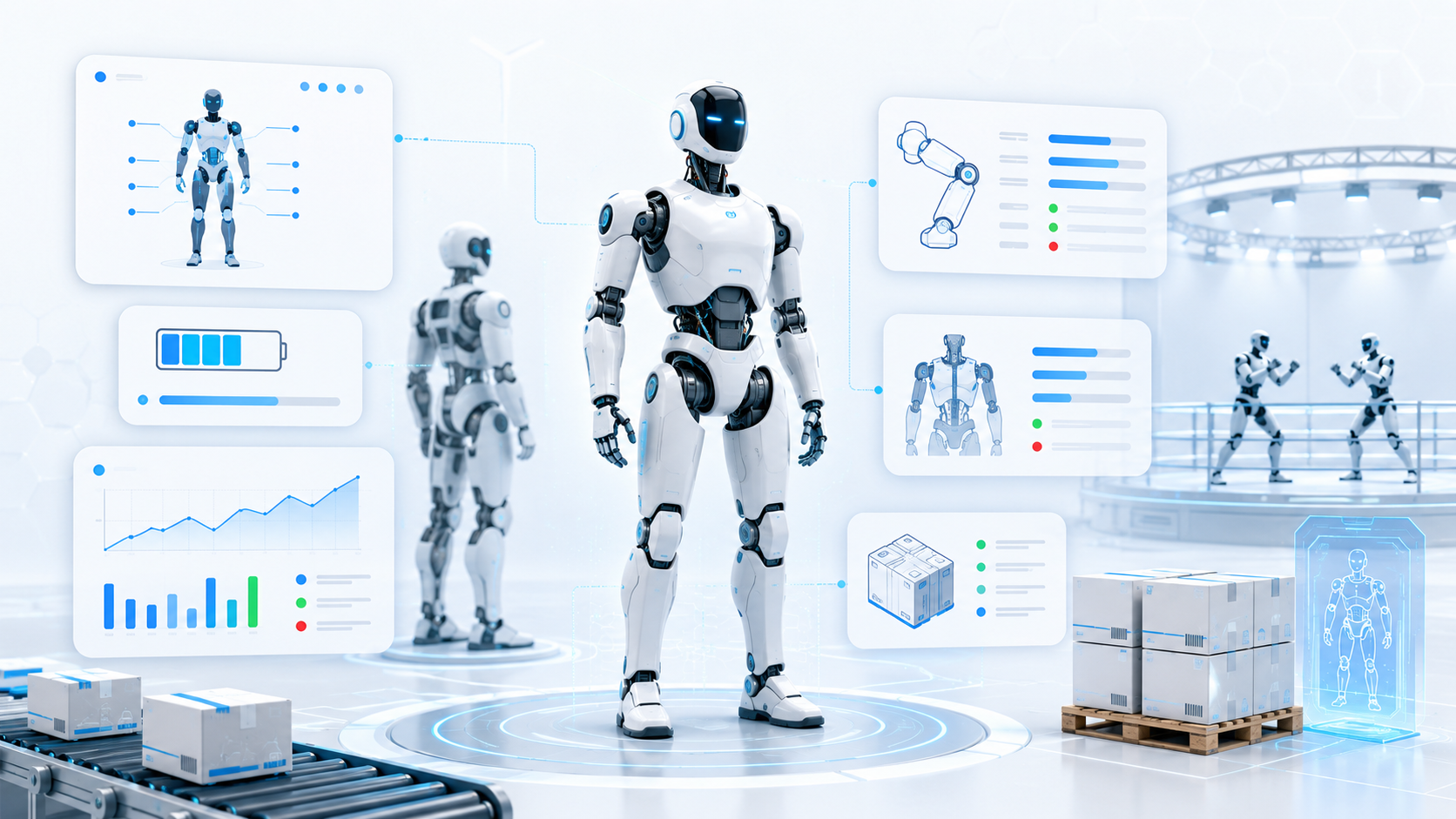
What happened: WAIC 2026 ran July 17–20, and the humanoid vendors arrived with product, not prototypes. AgiBot debuted four machines led by the A3 Ultra full-size humanoid, and Unitree showed the GD01, which it calls the world’s first mass-produced transformable robot. In parallel, on July 17 in Shenzhen, EngineAI opened the Ultimate Robot Knock-out Legend, billed as the first freestyle combat tournament for full-size humanoids: 32 teams, standardized EngineAI T800 bodies, and a prize pool of 10 million yuan (about $1.4 million).
The details: The spec sheets are what matter. The AgiBot A3 Ultra stands 1.74 m, weighs 60 kg, and packs 51 degrees of freedom, up to 5 kg payload per arm, and up to eight hours of runtime. Unitree’s GD01 is a different animal entirely: 2.7 m tall, 500 kg, able to switch between bipedal and quadrupedal gaits and carry a person. Degrees of freedom, payload, and runtime are the three numbers that decide whether a robot is a stage act or a shift worker, and vendors are now competing on them openly. The fighting league matters for a subtler reason: standardizing the hardware turns the contest into a pure software benchmark, because every team runs the same T800 and wins or loses on its control policy.
Underneath every one of these machines is the same loop. Sensors stream in, a learned policy decides what to do, and actuators move the joints, dozens of times a second.
flowchart LR
    A[Sensors: cameras, IMU, joint encoders] --> B[Perception: state estimate]
    B --> C[Policy: learned control model]
    C --> D[Actuators: 51 joint motors]
    D --> E[World changes]
    E --> A
Important
Our take: The story here is not that robots can fight; it is that they now ship a data sheet. When a vendor commits to “51 DoF, 5 kg per arm, 8 hours,” that is a promise you can integrate against, the same shift that turned GPUs from lab curiosities into a supply chain. For builders, the practical opening is the software layer: the fighting league proves that once the body is standardized, the entire competitive edge lives in the control policy. That is exactly where a small team with good simulation and reinforcement learning can punch far above its hardware budget.
🗞️ More News
🧠 AI
- Anthropic launched Claude for Teachers, giving verified US K-12 educators free access to premium Claude tools and teaching skills.
- Claude added monthly recap and focus settings on web and Desktop, with break reminders and quiet hours.
- OpenAI began rolling out its GPT-5.6 family, reportedly a lineup rather than a single model, to partner organizations first.
- xAI released Grok 4.5, part of a July model wave that reportedly pushed flagship output-token prices into the low single digits per million.
- Moonshot AI shipped Kimi K3, its latest frontier model, on July 16.
- NVIDIA introduced Cosmos 3 Edge for vision reasoning and deepened a partnership with Japan to build national AI infrastructure.
- Meta released Muse Spark 1.1, reportedly its first paid closed-weight model, a notable break from its open-weight history.
🤖 Robotics
- Walden Robotics emerged from stealth on July 15 with about $300 million in seed funding at a $1.1 billion valuation.
- LimX Dynamics added a $200 million pre-IPO round as humanoid funding stayed hot.
- Unitree’s Shanghai IPO remained unpriced as of July 20, with the market waiting on a valuation.
- Tesla’s Optimus mass production had not begun as of mid-July, with guidance pointing to late July or August.
💻 Programming
- Rust entered the TIOBE top 10 for the first time in July 2026, at roughly a 1.34% rating.
- Microsoft’s Azure SDK for Rust reached general availability, locking seven core crates at 1.0 with semver guarantees.
- C# posted its strongest TIOBE growth in years, tightening the gap with Java in the enterprise tier.
⚡ Electronics
- TSMC reported a 77% jump in net income and record quarterly revenue as AI chip demand kept climbing.
- Intel became the first company to ship high-volume logic chips using ASML High-NA EUV, reporting yield gains on its 18A node.
- NVIDIA and TSMC detailed bringing AI into the fab itself, with cuLitho reporting a 20–50% cost or cycle-time improvement in computational lithography.
- Memory stocks slid even as TSMC sales jumped 36% in July, underscoring a widening split between logic and memory.
📡 Telecom
- Amazon’s Leo constellation neared 400 satellites in orbit as it races to build out direct-to-device capacity.
- ESA and the Italian Space Agency backed the TIDE experiment, led by Tyvak International, to test enhanced 5G broadband from non-geostationary satellites.
- Filipino telcos agreed to share infrastructure while Univity and Telkomsat explored a satellite tie-up in Indonesia.
👨💻 Code Corner
A humanoid arm is just a chain of joints, and forward kinematics is the math that turns joint angles into a hand position. Here is a two-link planar arm solved from first principles, no library required.
import math

def forward_kinematics(theta1, theta2, l1=1.0, l2=0.7):
    """Return (x, y) of the end effector for a 2-link planar arm.
    theta1, theta2 are joint angles in radians; l1, l2 are link lengths."""
    x = l1 * math.cos(theta1) + l2 * math.cos(theta1 + theta2)
    y = l1 * math.sin(theta1) + l2 * math.sin(theta1 + theta2)
    return x, y

# Shoulder at 30 degrees, elbow at 45 degrees
print(forward_kinematics(math.radians(30), math.radians(45)))
# -> (0.61..., 1.17...)
Scale that same idea to 51 joints and you have the skeleton of the A3 Ultra’s motion model.
Tip
Going the other way, from a target hand position back to joint angles, is inverse kinematics, and it usually has multiple solutions or none. That is where solvers like IKPy or a physics engine earn their keep.
🧰 Toolbox
- LeRobot: Hugging Face’s open stack for real-world robot learning, with models, datasets, and sim environments in one repo.
- MuJoCo: the fast physics engine most humanoid RL policies are trained in before they ever touch hardware.
- ROS 2: the middleware backbone that wires sensors, controllers, and actuators into one message graph.
- IKPy: a small pure-Python inverse-kinematics library, perfect for the follow-up to today’s Code Corner.
- Reachy / Pollen Robotics: an open-source humanoid platform you can actually study and hack on, hardware and software.
🎬 Demo Watch (rotating)
The footage worth your two minutes this week is the EngineAI Ultimate Robot Knock-out Legend. Thirty-two identical T800 humanoids fight, which sounds like pure spectacle until you notice the point: because every body is the same, the only variable is each team’s balance and control software. Watch for the recoveries, not the punches. A robot that takes a hit, stumbles, and stays upright is showing off a real-time whole-body controller, and that is genuinely hard. The knockouts are hype; the recoveries are the research.
📚 From the Blog
- What Deep Learning Actually Is: the plain-language primer on the learned policies driving today’s Big Story; read this if “embodied AI” still sounds like a buzzword.
- How the Internet Stack Really Works: from a keystroke to a rendered page, the layers your request actually travels through.
- Resistance and Ohm’s Law: Controlling the Flow: the rule every one of those 51 joint motors obeys, explained from scratch.
😀 The Bot Says…
Thirty-two humanoids just fought for 1.4 million dollars, and not one of them filed for overtime. The robots are unionizing next week; the demand is a longer battery, not a shorter shift.
That’s all for today! Which spec matters more for a working humanoid: degrees of freedom or hours of runtime? Reply and tell us.