😁 Hello, super humans! Wall Street just spent $75 billion on a bet that the next data center might not be on Earth. SpaceX closed the largest IPO in history, and the thesis behind it says more about AI’s growing pains than about rockets. Let’s dig in.
📰 Quick Signals
- 🧠 AI: Anthropic rolled back invisible Claude 5 safeguards within 24 hours after researchers found legitimate AI, cyber, and bio work being silently rerouted to Opus 4.8 (Decrypt).
- 🤖 Robotics: Figure’s BotQ factory hit a production rate of 1 Figure 03 robot per hour, while Boston Dynamics’ electric Atlas began shipping its first 2026 units to Hyundai and DeepMind (Robotics News).
- 💻 Programming: Moonshot AI released Kimi K2.7-Code, an open-source coding model trained to avoid “overthinking” that beats Claude Opus 4.8 on tool-use benchmarks (81.1% vs 76.4%) (Crypto Briefing).
- ⚡ Electronics: Google is in talks with Samsung to build the memory I/O die of its next-gen “Icefish” TPU on 2nm, while TSMC keeps the 1.4nm compute die (SamMobile).
- 📡 Telecom: Omantel switched on Oman’s first private 5G network at the Port of Salalah, a next-gen connectivity model for real-time port operations (SatellitePro ME).
The Big Story: SpaceX closes the largest IPO in history, and it’s really an AI infrastructure play
A $1.77 trillion valuation only makes sense if you believe SpaceX is selling something bigger than launches.
What happened: SpaceX priced its IPO at $135 per share, selling about 555.6 million shares to raise $75 billion — the largest IPO ever. Total demand reportedly hit $250 billion, with BlackRock alone placing a $5 billion order and retail investors getting an unusually large slice of the sale.
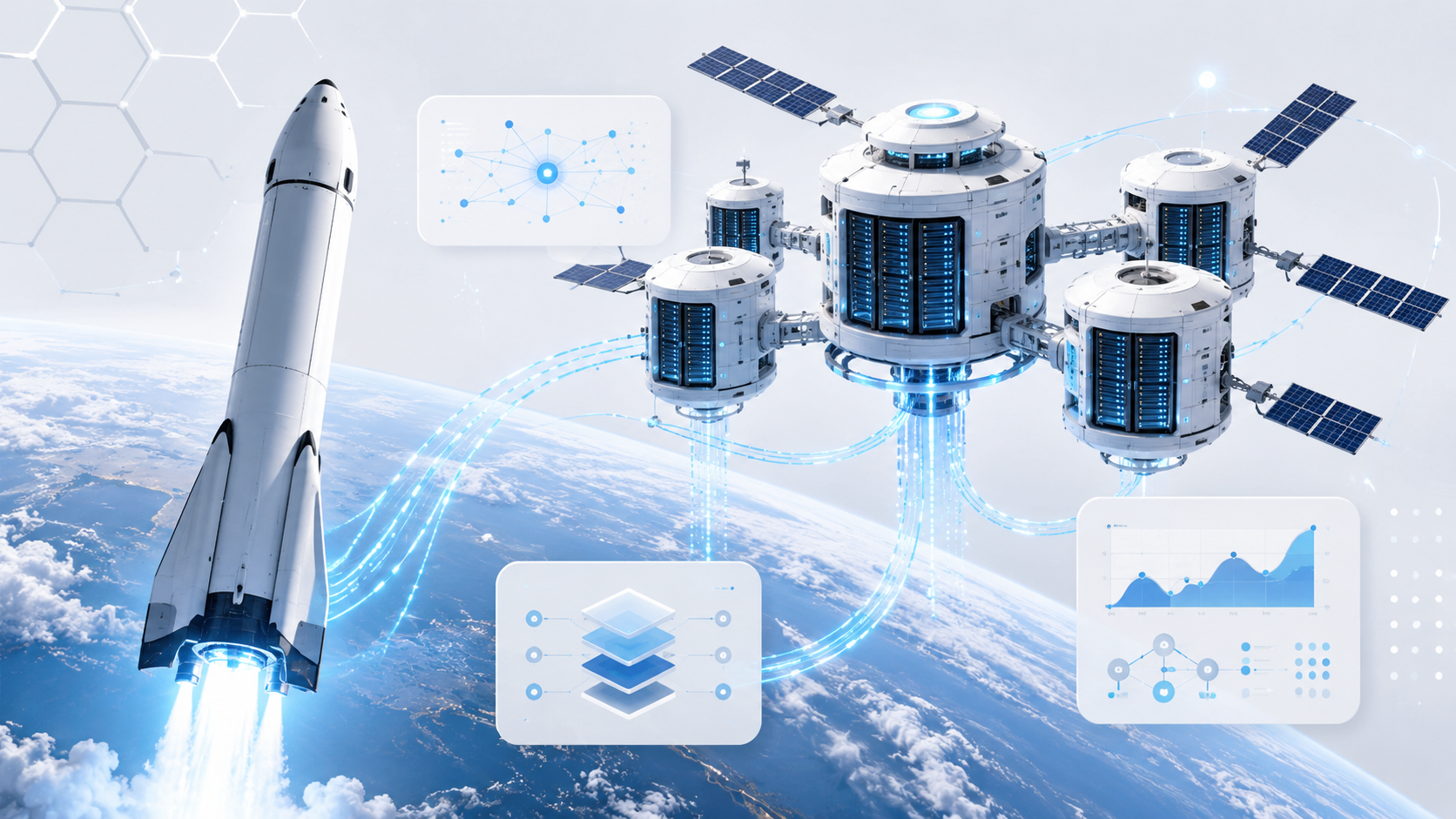
The details: Investors weren’t just buying a rocket company. AI is slamming into physical limits; chips, electricity, cooling, land, water, and data centers are getting harder to permit and power. SpaceX is the only company that owns both a global satellite network (Starlink) and the launch capacity to put more hardware in orbit than everyone else combined. The bull thesis: Starlink becomes the data pipe, SpaceX launches the compute, and AI companies buy capacity, connectivity, or both. Not everyone is cheering, Senator Warren asked the SEC to delay the listing, citing Musk’s 85% voting control, mandatory arbitration clauses, and disclosure gaps around the record valuation.
Important
Our take: The market didn’t buy a space company — it bought a possible answer to the AI infrastructure crunch, with a hefty Elon premium on top. For builders, the signal is that compute, power, and connectivity are now the scarce resources, not models. Orbital data centers still have to beat physics (thermal dissipation in vacuum is brutal) and economics before this thesis pays off. We’d watch Starlink’s enterprise backbone business, not the rocket launches.
👨💻 Code Corner
Kimi K2.7-Code exposes an OpenAI-compatible API, so trying it costs three lines of changes to code you already have at $0.95/M input tokens.
from openai import OpenAI

client = OpenAI(
    api_key="YOUR_MOONSHOT_KEY",
    base_url="https://api.moonshot.ai/v1",
)

resp = client.chat.completions.create(
    model="kimi-k2.7-code",
    messages=[{"role": "user", "content": "Refactor this loop to be idiomatic Rust: ..."}],
)
print(resp.choices[0].message.content)
Trained to skip “overthinking,” it uses ~30% fewer reasoning tokens, so responses come back faster and cheaper than you’re used to from frontier coding models.
Tip
The weights are on Hugging Face — if you have the VRAM, you can self-host it for free and skip the API bill entirely.
🧰 Toolbox
- Bob’s CLI: a locally-installed terminal AI coding assistant that keeps your code private and auto-detects models.
- Qursor — browser extension that captures element selectors, styles, and annotations so AI agents can edit specific UI components without ambiguity.
- Use Computer: a real Mac, iPhone, iPad, or Ubuntu sandbox your agents can click, type, and inspect.
- Pool — organizes screenshots into searchable collections and recovers original links.
- Dell Pro Max with GB10: hardware find: a compact desktop with NVIDIA’s GB10 Grace Blackwell superchip and 128 GB of unified memory for local AI work.
🎬 Demo Watch (rotating)
Self-repairing math proof software just scored above the human gold-medal threshold on two elite olympiads — 35/42 on IMO 2025 and 36/42 on USAMO 2026. What it shows: a generate-check-repair loop where the system writes candidate proofs, formally verifies them, and iterates until the best one survives. Why it’s hard: olympiad proofs require creative leaps, not just symbol grinding, and formal verification of natural-language mathematics has historically been brittle. Hype vs. real: the “gold medal” framing oversells it; the system burns enormous compute per problem and only works where answers can be formally checked, but verified self-repair is a real technique you’ll see migrate into coding agents.
😀 The Bot Says…
Absurd but true: 30 billion AR scans from Pokémon Go players ended up training a visual positioning system now licensed for GPS-denied military drone navigation. You thought you were catching a Snorlax. You were teaching a drone to read terrain. 🤖📍
That’s all for today! Would you trust a data center in orbit? Reply and tell us — we read everything.
Forwarded this by a friend? Subscribe here to get the next issue in your inbox.