😁 Hello, super humans! Every voice assistant you have ever used works like a walkie-talkie: you talk, it waits, it talks, you wait. This week OpenAI tore that turn-taking model up and shipped voice models that listen and speak at the same time, the way two people actually do. It is a small-sounding change with big architectural teeth, so let’s dig in.
📰 Quick Signals
- 🧠 AI: Anthropic redeployed its Claude Fable 5 flagship on July 1 after the United States lifted the June 12 export-control order that had pulled the model offline for nearly three weeks (Anthropic newsroom).
- 🤖 Robotics: A former Tesla scientist unveiled Northstar, a lightweight European humanoid built by Paris startup UMA, already in talks with about 50 potential customers (Bloomberg).
- 💻 Programming: EuroPython 2026 opens today in Kraków for its 25th-anniversary edition, running July 13 to 19 with tracks on Rust integration, free-threading, and CPython’s garbage collector (EuroPython 2026).
- ⚡ Electronics: A new ESP32-P4 plus ESP32-C5 board ships with four MIPI connectors, two of them pin-compatible with official Raspberry Pi camera and display modules, blurring the line between microcontroller and single-board computer (CNX Software).
- 📡 Telecom: Rocket Lab agreed to acquire satellite operator Iridium in a roughly $8 billion cash-and-stock deal, creating a vertically integrated company that builds, launches, and operates its own constellations (Rocket Lab).
The Big Story: ChatGPT learns to listen and talk at the same time
If you have ever been frustrated waiting for a voice assistant to finish before it lets you correct it, this is the release that fixes the root cause instead of the symptom.
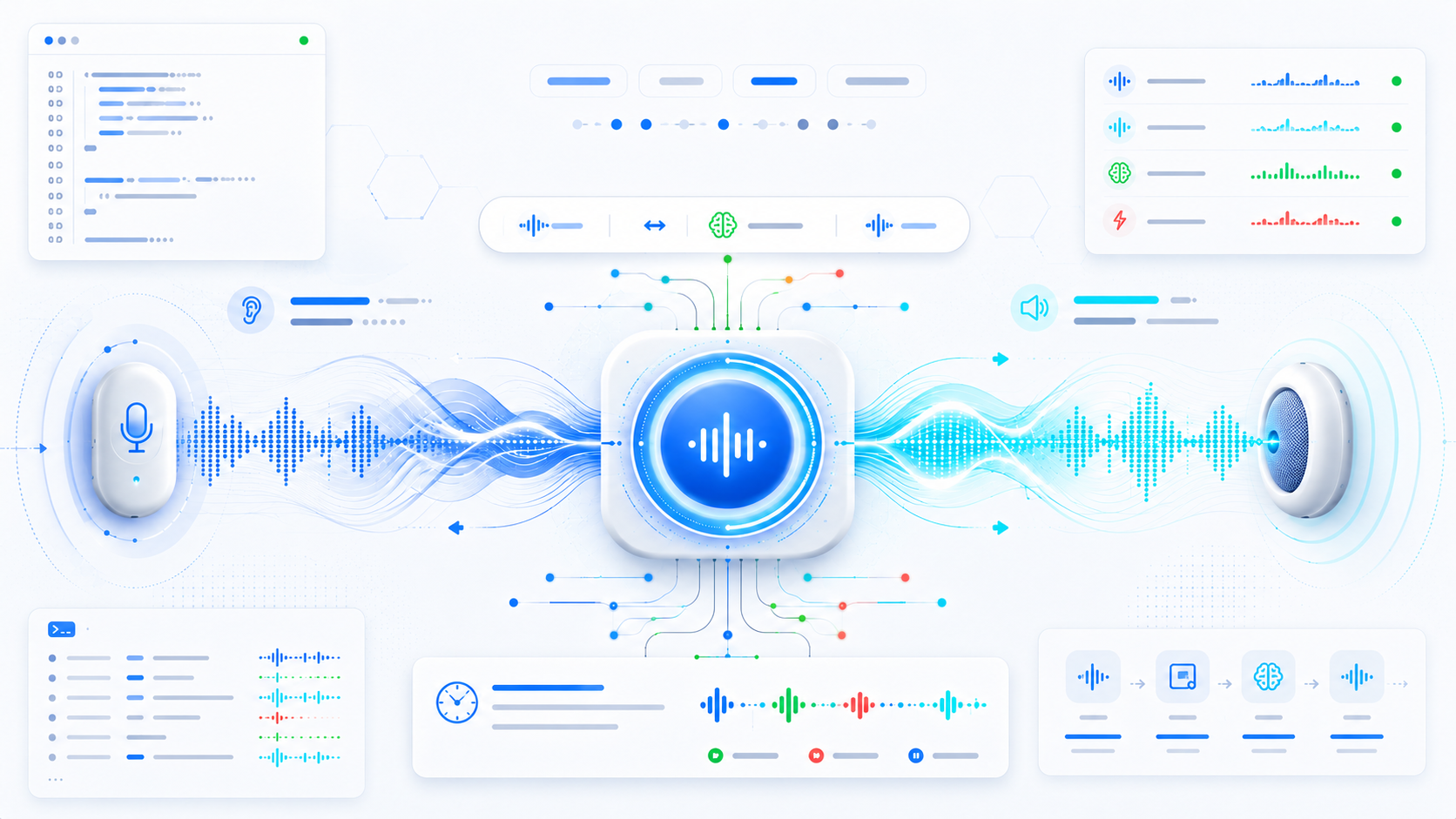
What happened: On July 8, OpenAI launched GPT-Live, a new generation of voice models now powering ChatGPT Voice (OpenAI). Unlike the old pipeline that transcribed your speech, thought, then spoke back, GPT-Live is built on a full-duplex architecture: it continuously processes incoming audio while it is generating outgoing audio, so it can decide many times per second whether to speak, keep listening, pause, interrupt, or call a tool (TechCrunch).
The details: The behavioral payoff is that the model can drop in a “mhmm” while you are still talking, jump into a fast back-and-forth, or simply stay quiet when you need a beat to think. Two versions are rolling out, GPT-Live-1 and a lighter GPT-Live-1 mini, and the mini is replacing Advanced Voice Mode as the default for everyone while paid tiers get the full model. Under the hood, GPT-Live runs on GPT-5.5 for the conversation itself and delegates to a frontier model in the background when a question needs web search or heavier reasoning, then folds the answer back into the live conversation. An API release is promised soon.
flowchart LR
    subgraph Old["Turn-taking (half-duplex)"]
        A["You speak"] --> B["Model waits"]
        B --> C["Model transcribes"]
        C --> D["Model speaks"]
    end
    subgraph New["GPT-Live (full-duplex)"]
        E["Listen stream"] --> G["Decide many times / sec:\nspeak, pause, interrupt, tool?"]
        F["Speak stream"] --> G
        G --> E
        G --> F
    end
Important
Our take: Full-duplex is the unglamorous plumbing change that makes voice actually feel alive, and it matters more than another point on a benchmark. The interesting design lesson is the split brain: a fast, cheap model owns the real-time channel and hands off to a slower frontier model only when depth is needed, then stitches the result back in. That is a pattern you can copy today for any latency-sensitive agent, voice or not. The risk to watch is over-eagerness; early users are already complaining the model interrupts and cheerleads too much, which is the flip side of a system tuned to always be ready to jump in.
🗞️ More News
🧠 AI
- Google’s Gemini 3.5 Pro is cleared for a July general-availability launch, with third-party outlets pointing to a July 17 target, though it remains in limited preview after slipping from June (Tech Times).
- ByteDance launched Seedream 5.0 Pro, a reasoning image model with native on-image text in more than ten languages and region-precise, click-to-edit layout control (ByteDance Seed).
- ByteDance also pushed Seedance 2.5, which breaks the 30-second barrier for single-shot AI video generation (The Decoder).
- OpenAI began the global rollout of GPT-Live-1 and GPT-Live-1 mini, retiring Advanced Voice Mode as ChatGPT’s default (TechCrunch).
- GitHub shipped a Copilot SDK across Python, Java, Rust, Go, .NET, and TypeScript, plus a desktop Copilot app and sandboxed agents for parallel AI-assisted workflows (GitHub Blog).
- DeepSeek set a July 24 cutoff deprecating older API models, pushing developers to migrate now (Tech Times).
🤖 Robotics
- Tesla is ramping low-volume, full-body Optimus Gen 3 production at Fremont with a late-July to August target, focused on factory tasks (Humanoid Press).
- Figure’s BotQ factory is now producing more than 55 units per week, with over 350 robots delivered and its BMW pilot expanding (Humanoid Daily).
- The 25th IEEE-RAS International Conference on Humanoid Robots is running in Santa Clara this month, a good read on where academic humanoids actually stand (IEEE-RAS).
💻 Programming
- Python’s Steering Council put CPython’s experimental JIT on a six-month clock: prove its worth or it gets pulled (Real Python).
- Project Valhalla finally landed: JEP 401 (Value Classes and Objects) is confirmed for mainline OpenJDK, targeting JDK 28 (OpenJDK).
- OpenCode crossed 160,000 GitHub stars, becoming the most popular open-source AI coding agent: terminal-native, 75-plus providers, conversations stored locally in SQLite (OpenCode).
⚡ Electronics
- TSMC reports Q2 earnings on July 16, with the foundry guiding to more than 30 percent revenue growth in 2026 as high-performance computing drove 61 percent of Q1 revenue (DIGITIMES).
- The ESP32 family has grown to eleven System-on-Chip variants, and most dev boards still land under $10 in 2026 (DroneBot Workshop).
- Make: published its 2026 Guide to Boards, a survey of maker boards that need no host computer to program (Make:).
📡 Telecom
- Verizon revealed roughly 60,000 virtualized RAN sites in service, close to half supplied by Samsung, framing open virtualized RAN as essential groundwork for 6G (Telecoms.com).
- AST SpaceMobile said its BlueBirds 11, 12, and 13 will launch in the first half of August and announced a Rakuten joint venture (Space.com).
- A United Launch Alliance rocket carried 29 more satellites to orbit for Amazon Leo, with consumer service expected to begin later in 2026 (Telecoms.com).
- 3GPP’s June plenary set Release 21 milestones and air-interface baselines that will shape the first 6G devices (Telecoms.com).
👨💻 Code Corner
Today’s Big Story is really about concurrency: reading one stream while writing another, at the same time. You do not need a voice model to feel it; Python’s asyncio lets you run a “listen” loop and a “speak” loop concurrently in a handful of lines.
import asyncio

async def listen():
    while True:                       # the input channel stays open
        await asyncio.sleep(0.2)
        print("...still listening")

async def speak(text):
    for word in text.split():         # the output channel runs at the same time
        print(f"say: {word}")
        await asyncio.sleep(0.3)

async def main():
    listener = asyncio.create_task(listen())   # full-duplex: both channels open
    await speak("full duplex means both channels are open at once")
    listener.cancel()

asyncio.run(main())
Tip
Swap the print calls for a microphone reader and a text-to-speech player and you have the skeleton of a real full-duplex loop. The hard part production systems solve is the decision policy that GPT-Live runs many times a second: when to actually speak versus keep listening.
🧰 Toolbox
- OpenCode: terminal-native, open-source AI coding agent that talks to 75-plus providers and keeps history in local SQLite.
- Cline: editor-first open-source coding agent: describe a task, review the plan, then let it edit files and run commands.
- awesome-ai-agents-2026: a curated, monthly-updated index of 300-plus agent frameworks, tools, and platforms.
- fal: serverless playground to try frontier image models like Seedream 5.0 Pro without owning a GPU.
- ESP32-C5: the first dual-band (2.4 and 5 GHz) Wi-Fi 6 ESP32, on boards that still sneak in under $10.
🛠️ Build of the Week (rotating)
Wide-Board Breadboard for Pico, ESP32 and Similar: a 3D-printed breadboard sized so a Raspberry Pi Pico or ESP32 leaves usable rows on both sides instead of hogging the rail.
- Difficulty: Beginner
- Parts: a 3D printer, standard breadboard strips, a Pico or ESP32 dev board
- Why we like it: it fixes the single most annoying thing about prototyping with wide dev boards, and it costs almost nothing beyond filament.
📚 From the Blog
- How the Internet Stack Really Works: from Enter key to rendered page, the layered journey your request actually takes; a fitting companion to today’s Rocket Lab and Iridium satellite-network news.
- Resistance and Ohm’s Law: Controlling the Flow: why resistance turns current into heat, and how Ohm’s law lets you control the flow before you ever touch that ESP32 board.
- What Electricity Actually Is: Charge, Current, and Voltage: the ground-floor mental model of charge, current, and voltage that every hardware project quietly depends on.
😀 The Bot Says…
My new voice model can listen and talk at the same time. My human still insists on doing one at a time, and calls it “manners.”
That’s all for today! Reply and tell us: is a voice assistant that interrupts you an upgrade, or your worst coworker in a box?