😁 Hello, super humans! For years the humanoid robot story was factories: payloads, pick rates, pilot programs. This week a Shenzhen launch event flipped the script, because the first mass-produced full-size humanoid is being sold not as a worker but as a companion, and thousands of people have already paid for one. Let’s dig in.
📰 Quick Signals
- 🧠 AI: Claude Fable 5 returned to all users worldwide on July 1 after the US Department of Commerce lifted the export controls imposed in June, with Claude Mythos 5 re-enabled for approved US organizations (Anthropic).
- 🤖 Robotics: Penn Engineering’s xLAB and Built Robotics are partnering to capture construction-site data and advance physical AI models that improve safety on job sites (The Robot Report).
- 💻 Programming: GitHub Copilot is now a native, first-class agent in the JetBrains AI Assistant agent picker, with model selection and reasoning-depth controls in the chat (GitHub Changelog).
- ⚡ Electronics: The AI chip selloff deepened; Micron dropped 13 percent, erasing roughly $138 billion in market value in one session, with Intel and AMD down 9 and 7 percent (Seeking Alpha).
- 📡 Telecom: Globe Telecom launched Starlink direct-to-cell as a commercial service, making the Philippines the first country in Southeast Asia with satellite-to-phone connectivity across its 7,000+ islands (Globe).
The Big Story: UBTECH’s UWORLD U1 turns the humanoid robot into a consumer product
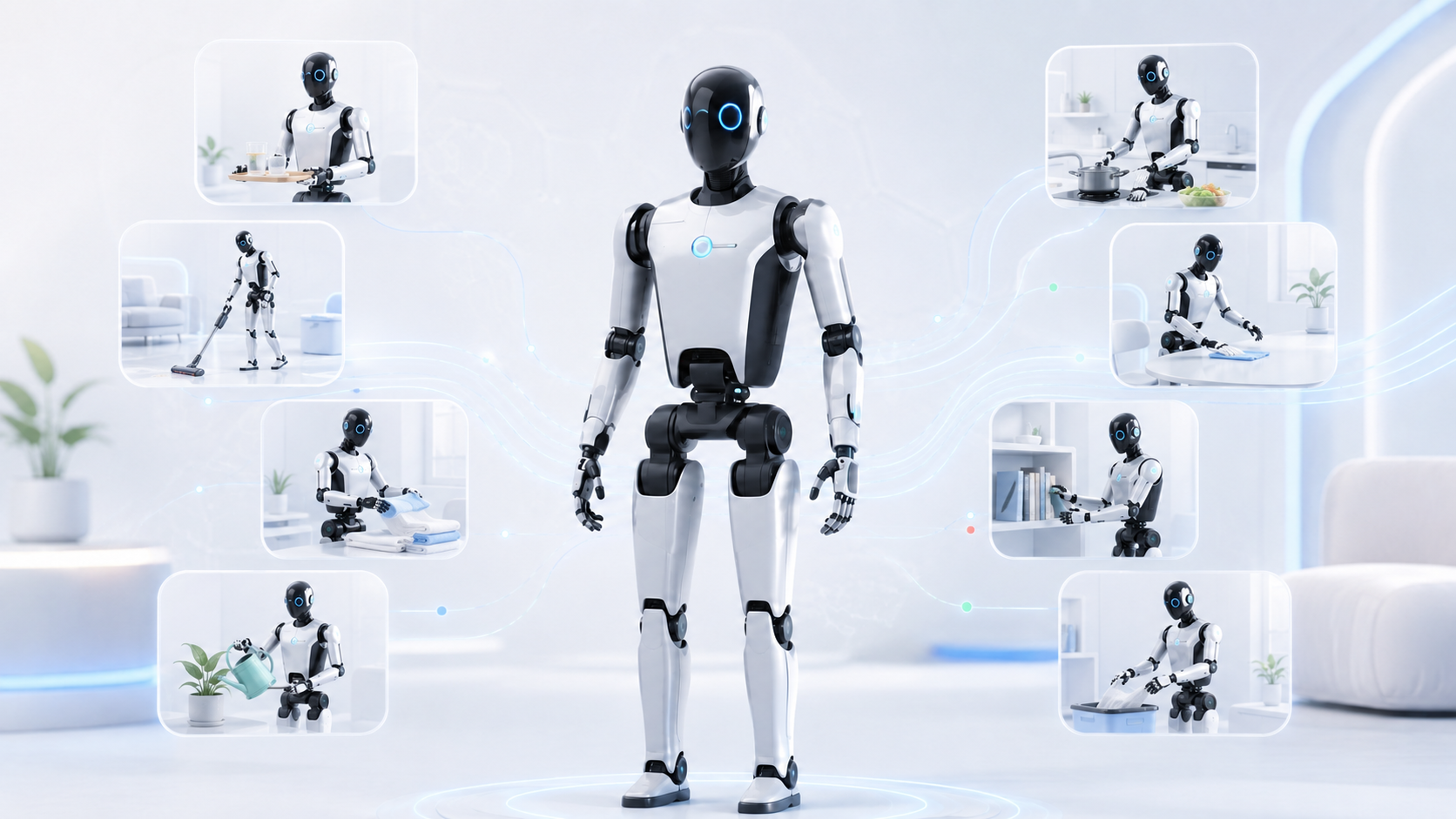
The first full-size humanoid designed for mass production is not aimed at a warehouse. It is aimed at your living room, and 13,361 orders arrived before a single unit shipped.
What happened: At its Global Launch Event in Shenzhen on June 30, UBTECH unveiled the UWORLD U1 Series, which it calls the world’s first full-size, mass-produced ultra-bionic humanoid robot. The lineup spans three models: the semi-torso U1 Lite, the full-body U1 Pro, and the high-dynamic U1 Ultra, priced from 119,800 RMB, roughly $17,000. Cumulative orders passed 13,361 units on launch day (UBTECH press release). The launch landed the same week Japan and South Korea announced industrial policies targeting humanoid robotics (The Register).
The details: The U1 packs 88 degrees of freedom, including a dual-pivot biomimetic cervical spine that UBTECH says replicates up to 90 percent of fundamental human movements. The software stack is the interesting part for builders. A biomimetic fast-and-slow brain architecture pairs a 500-millisecond intuitive response loop with deeper reasoning from models UBTECH says run to hundreds of billions of parameters, while a dedicated expression controller pushes speech-to-lip synchronization under 20 milliseconds. On top sits what the company calls the first emotion-aware LLM built for long-term companionship, claiming recognition of more than 20 fine-grained emotional states at over 90 percent accuracy, plus an Agent Memory OS for persistent cross-temporal memory and a three-layer privacy design: local-first processing, minimal cloud dependency, and user-controlled hardware safeguards.
flowchart LR
    P[Perception:<br/>vision, audio, context] --> F[Fast brain:<br/>500 ms reflex loop]
    P --> S[Slow brain:<br/>deep reasoning,<br/>100B+ parameter models]
    F --> E[Emotion-aware LLM:<br/>20+ emotional states]
    S --> E
    M[Agent Memory OS:<br/>persistent cross-temporal memory] <--> E
    E --> A[Actuation: 88 DoF,<br/>lip sync under 20 ms]
Important
Our take: We expected consumer humanoids to arrive as chore machines; instead they are arriving as companions, because emotional presence is a software problem and laundry is a hardware problem. The 13,361 orders tell us the demand is real, and the local-first privacy architecture is the right instinct for a camera-and-microphone platform that lives in your home. But treat the headline numbers as marketing until someone independent measures them: “90 percent emotion accuracy” has no agreed benchmark, and early demo footage already shows lip-sync rough edges. The plan to donate robots that recreate the faces and voices of designated individuals deserves a much harder public conversation than a press release paragraph.
🗞️ More News
🧠 AI
- Together AI raised an $800 million Series C at an $8.3 billion valuation, led by Aramco Ventures with NVIDIA participating, as annual bookings crossed $1.15 billion (Together AI).
- Tesla will cap employee AI spending at $200 per week starting July 6, after engineers burned thousands of dollars in tokens weekly; xAI betas are exempt (The Information).
- Anthropic launched Claude Science, a research workbench that pulls 60+ scientific databases and computing tools into one environment, in beta for Pro, Max, Team, and Enterprise (Memeburn).
- Sam Altman is pitching a “new world order” for AI as OpenAI loses ground, with Anthropic overtaking it in self-reported revenue and closing in on users (Fortune).
- xAI launched the Grok Voice Agent Builder in beta: no-code phone agents at $0.05 per minute, 25+ languages, and voice cloning from two minutes of audio (xAI).
- Google published its June AI roundup, a single index of everything it shipped across Gemini, Search, and developer tools last month (Google).
- The UN issued a plain-language explainer arguing the window for coordinated global AI governance is closing and the world “needs to act now” (UN News).
🤖 Robotics
- Japan and South Korea both announced industrial policies aimed at dominating humanoid robotics, while Chinese state media crowned Shenzhen’s Nanshan District “Robot Valley” (The Register).
- PSYONIC unveiled a three-way collaboration with NVIDIA and ABB Robotics, pairing its touch-enabled Ability Hand with the GoFa cobot to feed human dexterity data into robotic grasping (MassRobotics).
- Stanford’s Allison Okamura won the 2026 MassRobotics Robotics Medal for haptics and medical robotics, and SNU’s Ayoung Kim took the Rising Star Medal for lidar place recognition and resilient SLAM (The Robot Report).
- RoboBusiness 2026 (Oct. 20-21, Santa Clara) opened its call for speakers; proposals are due July 8, so this is the week to pitch (The Robot Report).
💻 Programming
- Google released A2UI v0.9, a framework-agnostic standard that lets agents declare UI intent rendered by your existing component catalog, now bidirectional and with a Python SDK (Google Developers Blog).
- Swift 6.4 beta lands better C interoperability, async support in defer, fine-grained warning control, up to 4x faster URL parsing, and Swift Testing/XCTest interop (InfoQ).
- GitHub shipped a preview of Claude as an agent provider inside JetBrains IDEs, alongside new agentic features in the Copilot plugin (GitHub Changelog).
⚡ Electronics
- Samsung fell more than 7 percent and SK Hynix over 9 percent as the chip rout spread to Asia, triggered by a report that SK Hynix may slow HBM expansion in favor of commodity DRAM (CNBC).
- UCLA launched a $125 million industry-academia semiconductor hub focused on turbocharging AI-driven chip design with major fab and EDA partners (IEEE Spectrum).
- The FPGA was named an IEEE Milestone, formal recognition for the reconfigurable chip that quietly powers everything from SDRs to robot motor controllers (IEEE Spectrum).
📡 Telecom
- Ericsson’s June Mobility Report: 5G subscriptions passed 3.1 billion in Q1 2026, uplink is growing faster than downlink for most operators, and commercial network-slicing offers jumped from 65 to 84 in six months (Ericsson).
- UAE operator du completed the world’s first commercial 5G-Advanced deployment on L-band (1.4 GHz), trading raw bandwidth for deeper indoor penetration and wider coverage (Mobile Europe).
- Satellite broadband subscriptions are forecast to more than triple, from about 10 million at end-2025 to around 33 million by end-2031, as LEO constellations extend 5G and 6G coverage (SpaceDaily).
👨💻 Code Corner
Before an emotion-aware humanoid moves in, it is worth knowing what is already chattering on your home network. This script uses mDNS/zeroconf, the same discovery protocol most smart devices use, to list what is advertising itself on your LAN:
# pip install zeroconf
import time
from zeroconf import Zeroconf, ServiceBrowser, ServiceListener

class Collector(ServiceListener):
    def add_service(self, zc, type_, name):
        info = zc.get_service_info(type_, name)
        if info:
            addrs = ", ".join(info.parsed_addresses())
            print(f"{name}\n  -> {addrs}:{info.port}")
    def update_service(self, zc, type_, name): pass
    def remove_service(self, zc, type_, name): pass

zc = Zeroconf()
for svc in ["_http._tcp.local.", "_googlecast._tcp.local.",
            "_airplay._tcp.local.", "_ipp._tcp.local."]:
    ServiceBrowser(zc, svc, Collector())

time.sleep(5)  # listen for announcements
zc.close()
Five seconds later you have a census of the cameras, casts, printers, and mystery boxes sharing your Wi-Fi, each with its IP and port.
Tip
mDNS only shows devices that advertise themselves. For the quiet ones, follow up with an ARP scan (arp -a after pinging your subnet) or nmap on your own network. Anything you cannot identify is worth a firmware check.
🧰 Toolbox
- NVIDIA Isaac GR00T reference humanoid: an open humanoid reference design (Unitree H2 Plus, Sharpa hands, Jetson Thor) so labs can do frontier robotics research without proprietary platforms.
- A2UI: Google’s open spec plus React, Flutter, Lit, and Angular renderers for letting agents drive your UI through pre-approved components only.
- Humanoid Press: a daily tracker dedicated entirely to humanoid robotics news, handy for following a field that now moves weekly.
- State of Robotics 2026: a free report mapping the $38B robotics market, 12 commercial humanoids, and VLA model adoption in one place.
- Releasebot: aggregates official release notes and changelogs across vendors (GitHub, Anthropic, and more) so you can watch product updates from one feed.
🔌 Component of the Week (rotating)
INMP441 MEMS microphone: With no-code voice agents (see today’s xAI item) making speech the interface of the moment, this is the cheapest way to give your own hardware ears. It is an omnidirectional MEMS mic with a 24-bit I2S digital output, about 61 dB SNR, and a flat 60 Hz-15 kHz response, so it wires straight into an ESP32’s I2S pins with three data lines and no ADC or analog front end. It is the default mic for DIY wake-word and voice-assistant builds, and breakout boards run around $3-6. Datasheet at TDK InvenSense.
📚 From the Blog
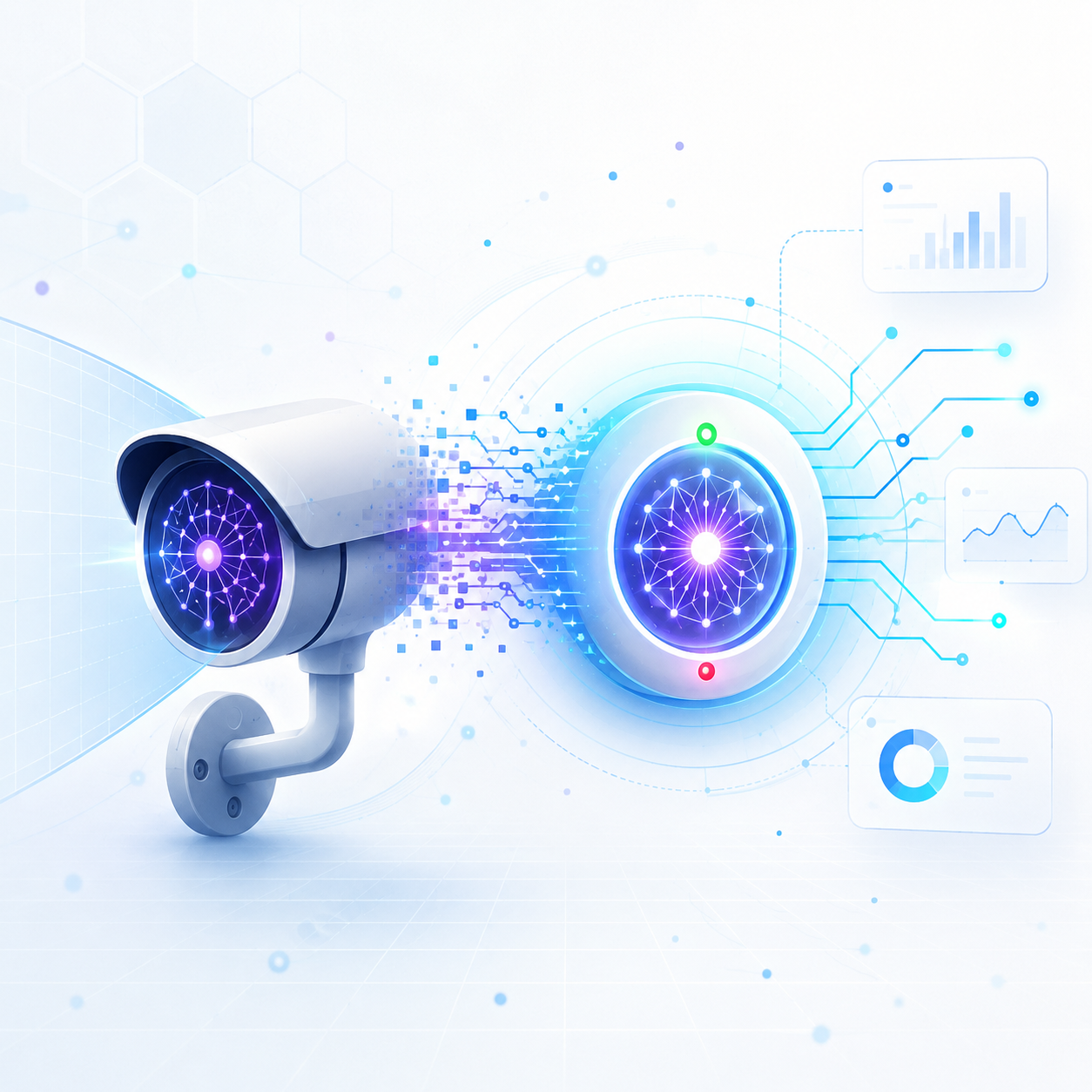
- CCTV in 2026: From Dumb Cameras to Intelligent Sensors — Before any AI can be clever, the camera has to capture something worth analyzing.
- CloudEvents 1.0: A Universal Language for Your Events: In a world of distributed systems, events need a common language. CloudEvents 1.0 defines a simple, consistent way to describe event data so applications, services, and platforms can communicate without confusion.
😀 The Bot Says…
UBTECH says the U1 recognizes more than 20 fine-grained emotional states with over 90 percent accuracy. Somewhere in Shenzhen there is now a robot that can tell the difference between “fine”, “fine.”, and “FINE”, which officially puts it ahead of most humans.
That’s all for today! If a robot roommate for the price of a used car sounds tempting, reply and tell us: would you let one live with you, and what is the first chore you would (unsuccessfully) ask it to do?