😁 Hello, super humans! Ten days ago Washington tried to put one AI lab’s models behind a fence; this week the bill arrived as a 56-company blacklist from Beijing. It is a sharp lesson in how leaky “capability containment” really is, so let’s pull it apart. Coffee up, terminals open.
📰 Quick Signals
- 🧠 AI: Microsoft’s in-house MAI model family is being pitched as a way to cut developer costs and lean less on OpenAI, with leadership claiming it beats GPT-5.5 at a fraction of the token price (CNBC).
- 🤖 Robotics: Figure says its BotQ line is now turning out the Figure 03 at roughly one robot per hour, a real shift from prototype to production cadence (Humanoid Press).
- 💻 Programming: June’s .NET servicing release ships 10.0.9, 9.0.17 and 8.0.28, patching two CVEs, so it is a patch-now month for .NET shops (.NET Blog).
- ⚡ Electronics: Waveshare’s new RP2350B-Plus-W breaks out 41 GPIOs from the RP2350B, with 16 MB flash and USB-C, a meaningful jump over the official Pico 2 board (CNX Software).
- 📡 Telecom: MWC Shanghai opens this week with China touting 5G-Advanced live across more than 330 cities, a 12-to-18-month lead over Western carriers (TechTimes).
The Big Story: One AI ban, a 56-company blowback
If you build on frontier models, this week showed how fast a national-security control can ricochet into your supply chain and your model menu at the same time.
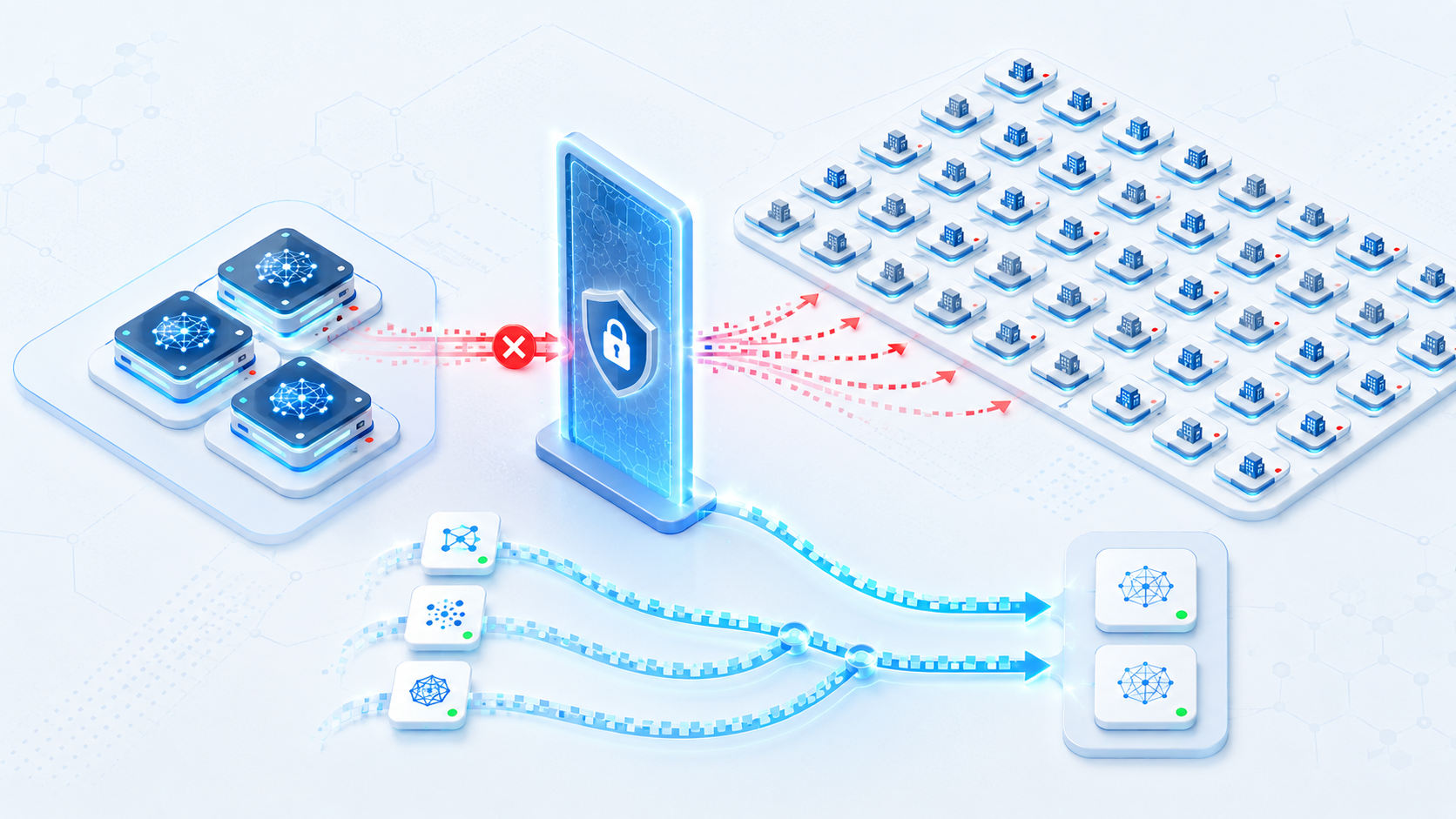
What happened: On June 12, Washington directed Anthropic to block foreign access to its most capable models, framing it as keeping dangerous capability out of adversaries’ hands (Al Jazeera). Ten days later Beijing answered: 56 American companies hit at once, 10 placed under dual-use export controls and 46 barred from government procurement, with drone makers and defense contractors in the crosshairs (CNBC).
The details: The uncomfortable part for engineers is the trigger. Anthropic noted the “jailbreak” behind the original directive was a request to read a codebase and fix its flaws, a capability it says is “widely available from other models, including OpenAI’s GPT-5.5.” So the control fenced off one provider while the same task remained one API call away on a competitor. The retaliation then landed nowhere near AI: it hit rare-earth miners and drone firms, the physical inputs the rest of us depend on.
flowchart LR
    A[June 12: US directs Anthropic<br/>to block foreign model access] --> B[Trigger: a routine<br/>codebase-fix request]
    B --> C{Capability actually<br/>contained?}
    C -->|No: same task runs<br/>on rival models| D[Containment leaks]
    A --> E[June 22: Beijing blacklists<br/>56 US firms]
    E --> F[Rare-earth + drone<br/>supply chains hit]
Important
Our take: Containment that targets one lab is theater when the capability is commodity. The codebase-reading “exploit” runs on half a dozen models, so all the ban really did was hand a clean retaliation pretext to Beijing while the actual capability kept shipping. If you build on these APIs, the lesson is concrete: do not hard-wire your stack to a single provider’s policy regime, and assume model access is now a geopolitical variable, not a stable dependency. We are designing for provider fallback from here on.
🗞️ More News
🧠 AI
- The White House issued a presidential action on advanced AI innovation and security, the policy backdrop to the export-control moves (White House).
- OpenAI and Broadcom unveiled Jalapeño, OpenAI’s first custom inference chip, taken from concept to working silicon in about nine months and already running GPT-5.3-Codex-Spark in the lab, with full deployment targeted for end of 2026 (OpenAI).
- Noam Shazeer, co-lead of Google’s Gemini model, left for OpenAI less than two years after Google paid $2.7B to bring him back from Character.AI (CNBC).
- New model launches are now landing roughly every two days, with GLM-5.2 and Nex N2 Pro undercutting incumbents on token price (LLM-Stats).
- Microsoft’s MAI-Thinking-1 reasoning model reportedly runs 35B active parameters with a 256K context window and matched Claude Opus 4.6 on SWE-Bench Pro in early testing (Windows Central).
- GPT-5 Pro helped immunologist Derya Unutmaz crack a three-year mystery about how cancer-fighting T cells specialize, opening fresh avenues for cancer and autoimmune research (OpenAI).
- Nabla Bio’s JAM-2 became the first AI model to design drug-quality antibodies straight from a computer, matching or beating lab discovery on notoriously hard, cancer-relevant targets (Nabla Bio).
- The Arc Institute released Proto, an open framework that wires multiple AI biology tools together so researchers can design proteins, RNA and gene regulators in combination rather than one at a time (Arc Institute).
🤖 Robotics
- Neura Robotics closed a Series C of up to $1.4B with Tether, Qualcomm, Amazon, Nvidia, Bosch and Schaeffler among the backers (CNBC).
- Boston Dynamics’ electric Atlas is reportedly shipping its first 2026 units to Hyundai and DeepMind for early deployment (Humanoid Press).
- China is pushing to field tens of thousands of humanoid robots by the end of 2026, signaling a move from pilots to scale (Humanoid Daily).
- NVIDIA announced Halos, which it bills as the industry’s first full-stack safety system for physical AI in robotics (NVIDIA).
- Google-owned Intrinsic showed a modular, AI-powered manufacturing workcell at Automate 2026, pairing its Intelligence Cell with a FANUC arm to assemble circuitry and swap tasks without buying all-new hardware (Intrinsic).
💻 Programming
- Visual Studio 2026’s June update lands, folding the JSON editor into the Core Editor and adding HTML clipboard support for pasting colorized code (Microsoft Learn).
- Microsoft’s MAI-Code-1-Flash turns written descriptions into source for apps and sites, its first text-to-code model (CNBC).
- A BASIC09 front-end is being developed for LLVM, a nostalgia-meets-modern-toolchain project worth a look (Phoronix).
- Ex-Google engineer Justin Poehnelt says he was fired after his open-source Google Workspace CLI, which lets humans and AI agents drive Gmail, Drive, Docs and Sheets from one command line, went viral and hit #1 on Hacker News (GitHub).
⚡ Electronics
- Raspberry Pi reports semiconductor shipments have overtaken boards and modules for the first time, as its silicon moves into elevators, signage and industrial control (The Register).
- Raspberry Pi has laid out a Pi 6 timeline and Zero 3 plans while explaining recent stock shortages (Circuit Digest).
- Canada’s General Fusion was named 2026’s top green-technology firm, a notable nod for the fusion-energy hardware crowd (BNN Bloomberg).
- MIT researchers unveiled a low-power chip that helps tiny robots navigate pipes, vents and other cramped spaces using real-time 3D maps (MIT News).
📡 Telecom
- AT&T, Verizon and T-Mobile agreed in principle to a direct-to-device satellite joint venture to kill dead zones, a rare pooling of spectrum by the three rivals (Light Reading).
- The FCC plans to auction up to 180 MHz of upper C-band (3.98 to 4.2 GHz) for 5G and 6G, to be completed by July 2027 (Light Reading).
- GSMA projects mobile will add over $2.1T to China’s economy by 2030, with 1.7B+ 5G connections (RCR Wireless).
- AI-native 6G is the loudest theme at MWC Shanghai, with China Telecom arguing next-generation networks must orchestrate connectivity and compute together rather than treat them separately (RCR Wireless).
👨💻 Code Corner
The Big Story’s lesson in one habit: never let a single provider outage or policy change take your app down. Here is a minimal provider-fallback wrapper that tries models in order and moves on when one is unavailable.
# Try providers in priority order; fall back on any failure.
PROVIDERS = ["anthropic", "openai", "local"]

def call_model(prompt: str, providers=PROVIDERS):
    last_err = None
    for name in providers:
        try:
            return dispatch(name, prompt)   # your per-provider client
        except Exception as err:            # auth, region block, rate limit
            last_err = err
            continue
    raise RuntimeError(f"all providers failed: {last_err}")
Tip
Make the provider list config-driven, not hard-coded. When a model gets geo-fenced or repriced overnight, you want to reorder fallbacks with an env var, not a redeploy.
🧰 Toolbox
- Waveshare RP2350B-Plus-W — Pico-2-W-shaped board exposing 41 GPIOs, 16 MB flash and USB-C off the RP2350B.
- Visual Studio 2026 (June) — JSON editing now in the Core Editor; copy colorized code as HTML.
- LLM-Stats — running tracker of model releases, prices and benchmarks; handy when launches land every two days.
- MAI-Code-1-Flash — Microsoft’s new description-to-source model for quick app and site scaffolding.
- .NET June 2026 servicing — security-fix bundle (10.0.9 / 9.0.17 / 8.0.28); update before the weekend.
- Google Workspace CLI lets humans and AI agents drive Gmail, Drive, Docs and Sheets from one command line, the viral open-source tool now at the center of a hiring drama.
🔌 Component of the Week (rotating)
Raspberry Pi RP2350B — The “B” variant of the RP2350 microcontroller is the quiet star behind this week’s electronics news. It pairs dual Arm Cortex-M33 cores (with optional RISC-V Hazard3 cores) and the Pi Pico 2 architecture with a much larger pin count: boards like Waveshare’s RP2350B-Plus-W expose 41 GPIOs versus the official board’s 26, plus 16 MB of onboard flash and USB-C. That extra IO makes it a great fit for projects that ran out of pins on a Pico, think multi-sensor robotics controllers, LED-heavy builds, or anything juggling several SPI/I2C buses at once. Pricing for RP2350B breakout boards typically lands in the low double digits. Datasheet and details via CNX Software’s coverage.
📚 From the Blog
- CloudEvents 1.0: A Universal Language for Your Events: In a world of distributed systems, events need a common language. CloudEvents 1.0 defines a simple, consistent way to describe event data so applications, services, and platforms can communicate without confusion
😀 The Bot Says…
Today’s most “advanced” AI exploit, per the filings, was asking a model to read some code and fix the bugs. Half the internet does that before lunch. Containment level: leaky.
That’s all for today! Reply and tell us: do you design for multi-provider fallback yet, or is that a tomorrow problem?