😁 Hello, super humans! The open-weight crowd spent the spring chasing the closed labs, and this month it stopped looking like a chase. A model you can download, self-host, and point at your own repo is now claiming frontier coding numbers, so let’s unpack what that really buys a builder, then sweep the rest of the beat.
📰 Quick Signals
- 🧠 AI: NVIDIA debuted its Nemotron 3 family of open models in Nano, Super, and Ultra sizes, releasing weights, training software, and most of the training data (NVIDIA).
- 🤖 Robotics: Boston Dynamics’ electric Atlas began shipping its first 2026 units, with the full run committed to Hyundai and Google DeepMind (Boston Dynamics).
- 💻 Programming: Astral’s
ty, an extremely fast Python type checker from the makers ofuv, keeps marching toward a stable 2026 release with 10x to 60x speedups over mypy (Astral). - ⚡ Electronics: Intel named Seok-Hee Lee executive vice president of Intel Foundry to lead advanced packaging and back-end manufacturing, reporting to CEO Lip-Bu Tan (Intel).
- 📡 Telecom: Mobile operators and the NGMN alliance pressed for a cleaner 6G standardization path, asking the industry not to repeat 5G’s fragmented rollout (The Register).
The Big Story: Open weights catch the frontier, and a coding model that fits in your own datacenter
For two years the deal was simple: if you wanted frontier coding and agentic performance, you rented it from a closed API. MiniMax M3 is the clearest sign yet that the deal is changing.
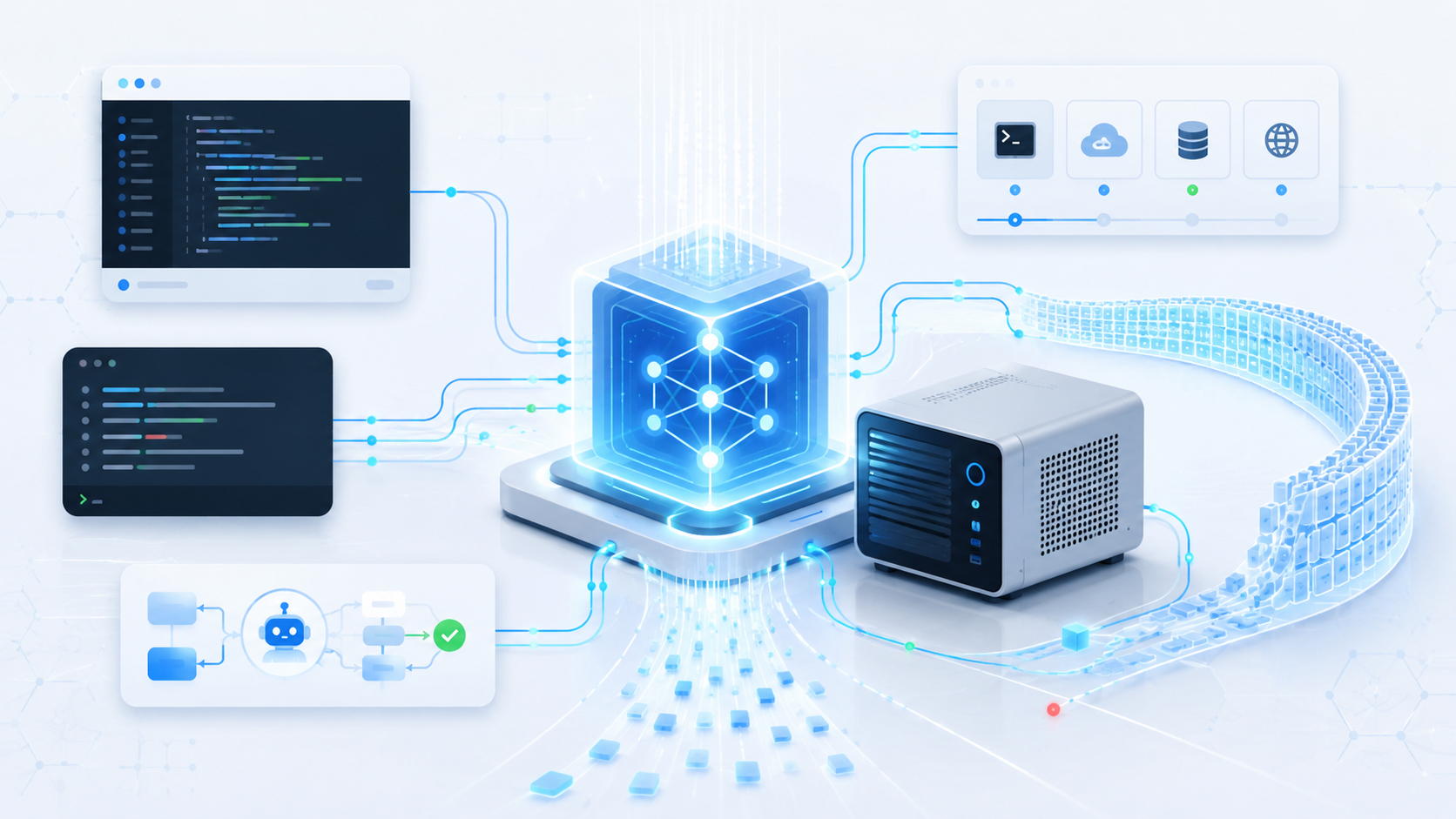
What happened: MiniMax announced M3 on June 1, 2026, calling it the first open-weight model to combine three frontier capabilities at once: top-tier coding and agentic performance, a one-million-token context window, and native multimodality across text, image, and video (MiniMax). The API went live the same day, and the weights are published on Hugging Face under the MiniMaxAI/MiniMax-M3 repository so you can self-host instead of renting.
The details: The headline number is 59% on SWE-Bench Pro, which MiniMax says edges out GPT-5.5 and Gemini 3.1 Pro on that coding benchmark. The architecture is a Mixture-of-Experts that only lights up a small slice of its parameters per token, layered on top of a custom MiniMax Sparse Attention (MSA) design that the company says slashes per-token compute at one-million-token context to a fraction of the prior generation, with multiples-faster prefill and decoding. Launch-week pricing landed near $0.30 per million input tokens and $1.20 per million output tokens, undercutting the closed frontier by a wide margin. The catch worth keeping in mind: the benchmark claims are vendor-reported, and independent coverage has flagged them as not yet reproduced.
flowchart LR
    A[Prompt up to 1M tokens] --> B[MiniMax Sparse Attention]
    B --> C[MoE router: activate a few experts]
    C --> D[Frontier coding + agentic output]
    A --> E[Text + image + video in one model]
    E --> B
    D --> F[Self-host the open weights<br/>or call the cheap API]
Important
Our take: The interesting part is not the leaderboard, it is the ownership. An open-weight model with a long context and a low price means you can run a capable coding agent inside your own network, on your own data, without metering every token to a third party. That is a real shift for anyone who could not send code to a closed API for compliance reasons. But treat the 59% like any vendor benchmark: clone the weights, point them at your own repository, and measure the pass rate on your actual issues before you rip out whatever you are paying for today.
🗞️ More News
A heavy week for open models and the silicon underneath them, with humanoids quietly scaling on the factory floor.
🧠 AI
- DeepSeek open-sourced a V4 Pro preview, a 1.6-trillion-parameter Mixture-of-Experts that undercuts every major proprietary competitor on API price (DeepSeek).
- Microsoft detailed its in-house MAI family at Build 2026, including the 5B-parameter MAI-Code-1-Flash and the MAI-Thinking-1 reasoning model, as a cost and independence play (Microsoft AI).
- The White House issued an executive action on promoting advanced AI innovation and security, the latest sign of policy catching up to the model race (The White House).
🤖 Robotics
- Figure AI’s BotQ factory hit one Figure 03 per hour, a roughly 24x throughput jump in under 120 days, with end-of-line first-pass yield above 80% (Figure).
- Boston Dynamics and Hyundai Motor Group are building a robotics factory aimed at producing tens of thousands of Atlas units per year as the platform moves from research robot to industrial humanoid (Boston Dynamics).
- Neura Robotics’ up-to-$1.4B Series C keeps reverberating across the sector, with Amazon, Nvidia, Qualcomm, Bosch, and the European Investment Bank on the cap table (CNBC).
💻 Programming
- Django 6.0 shipped with built-in Content Security Policy support and runs on Python 3.12 through 3.14 (Django).
- The June 2026 TIOBE Index shows C++ retaking third place from Java, while Python keeps a wide lead at number one (TechRepublic).
- RISC-V Summit Europe 2026 wrapped in Bologna, with the open ISA’s “RISC-V is now” message aimed squarely at data-center and HPC workloads (RISC-V Summit Europe).
⚡ Electronics
- DigiTimes’ weekly roundup leads with Micron’s CEO framing the AI-era memory boom as a path to a US$1 trillion milestone (DigiTimes).
- InspireSemi and E4 Computer Engineering showed the Thunderbird “supercomputer cluster-on-a-chip,” a RISC-V part packing 1,536 64-bit cores, at the Bologna summit (E4 Computer Engineering).
- Apple’s push to turn Siri into a more capable AI agent is expected to lift mobile DRAM demand for Samsung, SK Hynix, and Micron (DigiTimes).
📡 Telecom
- NVIDIA and a roster of global telecom leaders committed to building 6G on open, AI-native software platforms (Computer Weekly).
- Europe’s operators are leaning on 5G Standalone, generative AI, and fixed-mobile convergence, with 89% of major carriers raising AI budgets in 2026 (TelecomLead).
- T-Mobile used MWC 2026 to talk up 6G, 5G-Advanced, and using AI to keep networks running through storms (Fierce Network).
👨💻 Code Corner
Most of this week’s open models speak the OpenAI Chat Completions dialect, so you can swap from a closed API to a self-hosted one by changing two lines. Point the official client at any compatible endpoint:
from openai import OpenAI

# Works against MiniMax, a local vLLM server, or any OpenAI-compatible endpoint.
client = OpenAI(
    base_url="https://api.minimax.io/v1",   # or http://localhost:8000/v1 for self-host
    api_key="YOUR_KEY",                       # read from an env var in real code
)

resp = client.chat.completions.create(
    model="MiniMax-M3",
    messages=[{"role": "user", "content": "Refactor this function and explain why."}],
)
print(resp.choices[0].message.content)
Tip
Keep the base_url in an environment variable, not the source. Then the same script runs against a cheap hosted API while you prototype and against your in-house GPU box in production, with zero code changes.
🧰 Toolbox
- MiniMax M3: open-weight coding and agentic model with a 1M-token context, downloadable for self-hosting.
- NVIDIA Nemotron 3: open Nano, Super, and Ultra models tuned for efficient multi-agent systems.
- ty: Astral’s Rust-built Python type checker and language server, 10x to 60x faster than mypy.
- Django 6.0: the web framework now ships built-in Content Security Policy middleware.
- DeepSeek V4 Pro: a 1.6T-parameter open MoE for heavyweight reasoning and coding.
🛠️ Build of the Week (rotating)
Deeply optimized MSX emulation on the ESP32-S3 with VGA output: a hand-tuned emulator that runs MSX1, MSX2, and MSX2+ software on a sub-$10 microcontroller and drives a real VGA monitor.
- Difficulty: Advanced
- Parts: ESP32-S3 with at least 8 MB PSRAM, a 2-bit R-2R resistor ladder for RGB222 VGA output, custom PDM filters on a couple of GPIO pins for audio.
- Why we like it: It is a clinic in squeezing a whole retro computer out of the Xtensa LX7 cores, and the VGA-from-a-resistor-ladder trick is the kind of hack that teaches you how displays actually work.
📚 From the Blog
- CloudEvents 1.0: A Universal Language for Your Events: In a world of distributed systems, events need a common language. CloudEvents 1.0 defines a simple, consistent way to describe event data so applications, services, and platforms can communicate without confusion
😀 The Bot Says…
Open weights, one-million-token context, and a coding agent that runs on your own box. The robots are not coming for your job; they are coming for your spare GPU.
That’s all for today! Self-hosting an open model this week? Reply and tell us which one, and what you are running it on.